President Trump’s Great Ballroom and Other White House Renovations
A breakdown of the White House’s major remodels.
By: Kirsten Brooker | November 12, 2025 | 980 Words
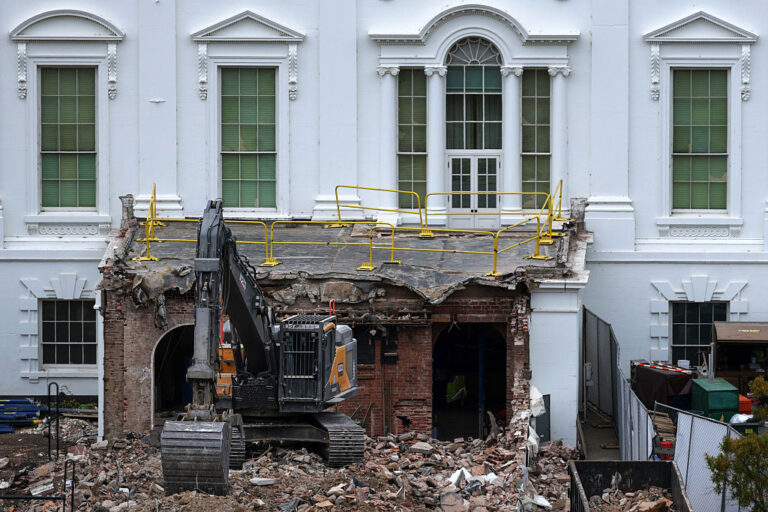
(Photo by Alex Wong/Getty Images)
The original White House began construction at 1600 Pennsylvania Avenue in 1791. Though he never got to live in the house, President George Washington chose its location along the Potomac River in Washington, DC. Since its creation, the “Executive Mansion” has undergone several major remodels – the latest being President Trump’s “East Wing Remodel,” as the media calls it. The project would replace the East Wing with a formal ballroom, a room the White House has never had. The topic has created a political conflict, as many Americans disagree with the destruction of the East Wing as well as where the funding is coming from. But White House renovations are not an uncommon occurrence. Presidents throughout history have made changes to the home. Here is a look at some of the most significant remodels and the presidents who requested them.
White House Repairs and Remodeling in the Early Years
The reasons for the first major remodel took place more out of necessity than luxury. The War of 1812 was a conflict between the US and Great Britain. The fighting took place from June 18, 1812, to February 17, 1815. On August 24, 1814, British troops stormed the White House and set it on fire. President James Madison and his wife, Dollie, were able to evacuate before the fire started. They also managed to save a couple of important historic items before they fled, including a portrait of George Washington from 1797.
The White House needed a lot of work following the fire. Nearly all the interior of the building was destroyed. Renovations took years to complete. President James Monroe was the first to regain entry in 1817. It reopened to the public in 1818.
Nearly a century later, Theodore Roosevelt and his large family overfilled the rooms and hallways of the White House. It became clear that expansion was necessary, as well as a separation of home activities and diplomatic offices. The renovations were overseen by architect Charles McKim. Along with creating space for the homes’ many residents, McKim added a West Wing, a separate building that served as office space for the presidential staff and had a room for the Cabinet to meet.
The Oval Office is an iconic symbol of the White House. Our country’s 27th president, William Howard Taft, remodeled the West Wing and added the egg-shaped office in 1909. A fire destroyed Taft’s Oval Office in 1929, and Franklin D. Roosevelt rebuilt it, using it as additional office space. Roosevelt built the new Oval Office in a different area of the West Wing, and that is the office we see the president use today.
The Roof Needs Replacing
Not much changed until 1927, when President Calvin Coolidge was made aware of the structural issues with the White House’s roof. Some feared the roof could collapse due to old age and the weight of the decades of paperwork and records that were being stored in the building’s attic.
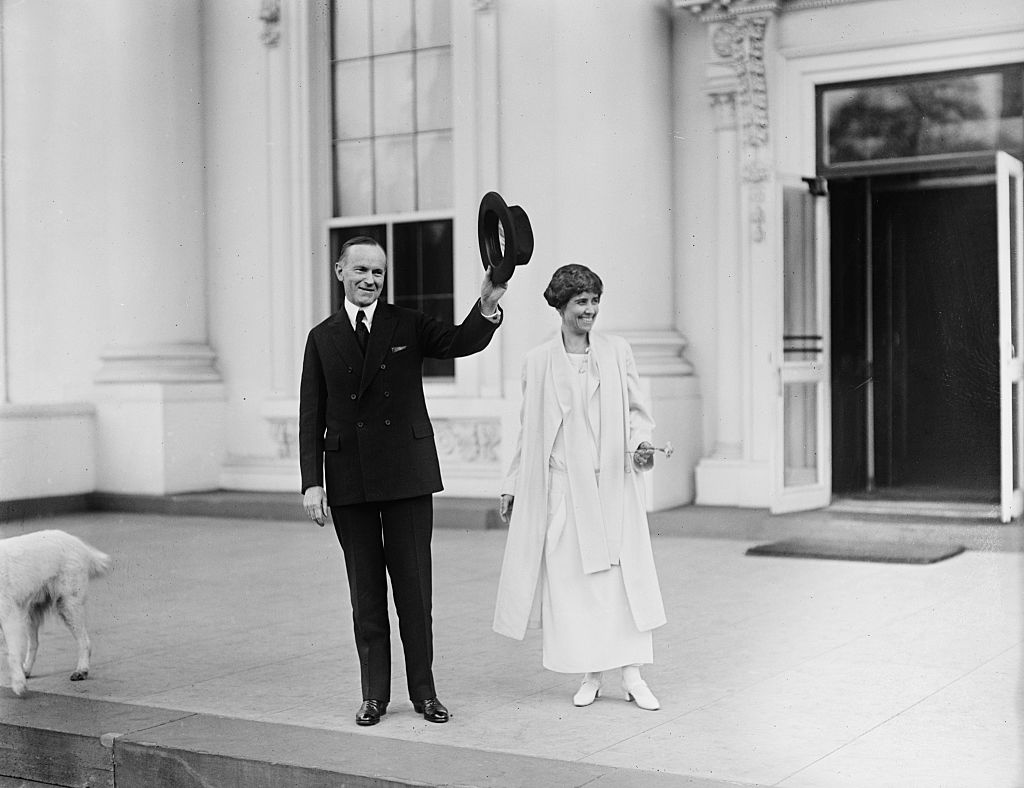
President Calvin Coolidge and first lady Grace Coolidge (Photo by: Universal History Archive/Universal Images Group via Getty Images)
The replacement of the roof also allowed for the construction of a third floor. This floor allowed space for the building’s servants and secretaries. Also included was a solarium with ceiling-to-floor windows that offered a beautiful view of the city.
Just a couple of years after Coolidge’s renovations were complete, the West Wing caught fire because of some faulty electrical work. The fire started on Christmas Eve in 1929 and destroyed around 200,000 documents, and once again, the roof. Both the West Wing’s attic and roof required replacement. Additionally, the White House press room was also damaged in the flames and needed repairs.
From East Wing to the Truman Rebuild
Further reconstructions took place in 1942 when the construction began on the East Wing. The added structure was built to cover the secret construction of the underground bunker to protect the president and his family in case of an attack during World War II.
In 1945, the White House was 150 years old and had been through a couple of fires and several structural changes. Harry S. Truman, the 33rd President of the United States, decided it was time for a complete remodel. The construction team completely gutted the building, leaving just the exterior walls intact. President Truman and his family stayed across the street at Blair House for four years until the work was complete. Since then, nearly every president has made at least some small changes – including Jimmy Carter, whose wife, Rosalynn, had the East Wing remodeled to include an office for the first lady.
The Latest Renovation
The latest White House renovation is in the hands of President Donald Trump. He has begun the construction of a 90,000 square foot formal ballroom to replace the East Wing. This will be the first room of its kind in the house. The project is expected to cost around $250 million, but no tax dollars will be used, as all the funds were either acquired through donations or provided by the president himself.
Some are angered by the remodel, showing distaste about the destruction of the East Wing, while other critics question the financial side of the operation. Regardless, the ballroom is being built in what Trump’s Press Secretary Karoline Leavitt described as “a much-needed and exquisite addition.”
Future presidents, like the ones before them, will likely continue to update and renovate the White House regularly. It is their home, after all.

1. It is common for presidents to perform regular updates and renovations on the White House.
2. In 1942, a bunker used to protect the president and his family in case of an attack during World War II was secretly built and the East Wing was built to cover it.
3. In 1945, President Harry S. Truman ordered a complete remodel, gutting the White House and rebuilding everything but the external walls.