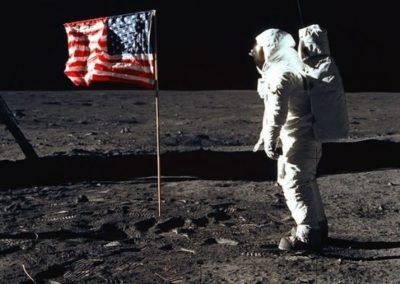
Men and Women on the Moon – From Apollo to Artemis and Beyond
Humanity’s triumphant return to deep space.
By: James Fite | April 7, 2026 | 957 Words
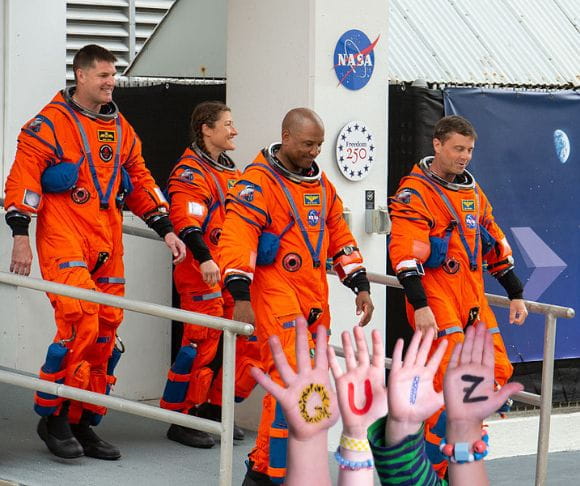
(Photo by Manuel Mazzanti/NurPhoto via Getty Images)
On April 1, 2026, the Artemis II mission – the first manned trip to the moon since 1972 – launched from the Kennedy Space Center at Cape Canaveral, FL. There won’t be any landing on the lunar surface until the Artemis III mission, which is planned for 2027, but this journey will be the farthest any human has ever been into space – and it will include the first ever non-American in a manned moon mission. Still, Artemis II is only the beginning of humanity’s return to deep space.
The Great Space Race
The first lunar landings followed the space race of the 1950s and ‘60s, which grew out of the Cold War. The United States and the Soviet Union (USSR, essentially Russia) both wanted control of Earth’s orbit, the moon, and the space in between for tactical reasons as tensions and the threat of nuclear war grew. In the ‘50s, ‘60s, and early ‘70s, both superpowers pushed farther into space.
The first man-made object to reach space was a V-2 rocket launched by Nazi Germany on June 20, 1944. In 1949, the United States successfully launched the first two-stage rocket. After the end of World War II, however, the USSR dominated the early space race, beating the United States to several milestones. The Soviet Luna 1 mission in 1959 was the first lunar flyby. Luna 2 saw the first impact with the moon. The United States didn’t achieve a lunar impact until 1962.
Meanwhile, Soviet cosmonaut Yuri Gagarin completed a 108-minute orbital flight aboard the Vostok 1 on April 12, 1961, becoming the first human in space. The first American in space was Alan Shepard almost a month later, on May 5, 1961. On Jan. 31, 1966, the Soviet Luna 9 mission saw the first successful landing on the moon, though no people were aboard the flight. The first successful orbit came in March of that year and was also a Soviet mission.
But the USSR’s superiority in space didn’t last.
From 1959 to 1965, the USSR sent four unmanned missions to the moon, and the United States sent five. From 1966 to 1969, the Soviet Union sent four unmanned missions to the moon – one of which included tortoises to test life support systems. The United States, however, launched ten successful missions to orbit, land on, and map out the moon in that same span.
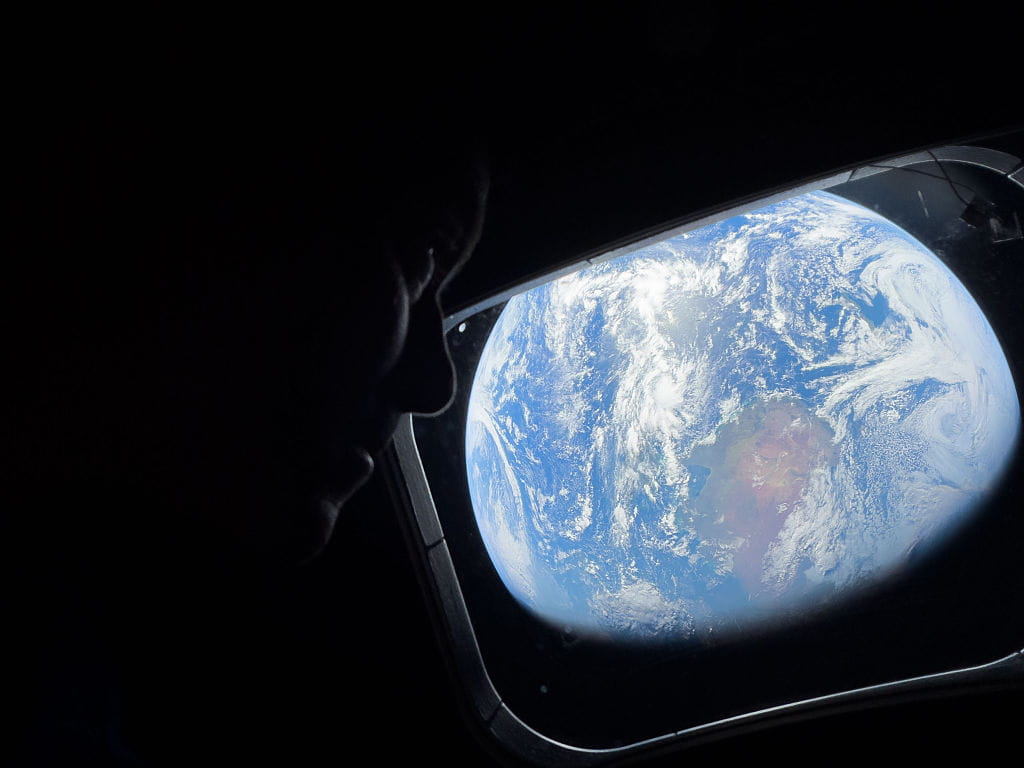
(Photo by NASA via Getty Images)
On Dec. 21, 1968, Frank Borman, Jim Lovell, and William Anders aboard the Apollo 8 mission became the first humans to orbit the moon and capture photographs of its far side and an Earthrise. They were followed by Thomas P. Stafford, John W. Young, and Eugene A. Cernan on the Apollo 10 mission in May of 1969. They orbited the moon 31 times and performed a “dress rehearsal” for the first lunar landing. That came next.
On July 16, 1969, the crew of Apollo 11 landed on the moon. Commander Neil Armstrong became the first human to set foot on the moon. Edwin “Buzz” Aldrin then joined Armstrong while Michael Collins remained in orbit to pilot the return module.
In total, the United States sent nine missions to the moon from 1968 to 1972 – all were manned. The USSR, meanwhile, sent just seven – none of which were manned – from 1970 to 1976. During this time, called the Apollo Era, 27 Americans headed for the moon. A dozen of them across six missions landed on the moon, and no other human has been back since.
Until now, that is.
Artemis II, Humanity’s Return to the Moon and Beyond!
From 1990 to 2024, there were 19 unmanned lunar missions launched from the United States, China, Japan, India, the EU’s European Space Agency, South Korea, and Russia. One of those was Artemis I on Nov. 16, 2022, when the United States launched the first of this mission series in preparation for Artemis II. Right now, Americans Reid Wiseman, Victor Glover, and Christina Koch are on their way to the moon, and they’re joined by the Canadian Space Agency’s Jeremy Hansen. Glover will be the first black astronaut on a lunar mission, while Koch will be the first woman and Hansen the first non-American.
Over ten days, they will journey beyond the moon, traveling deeper into space than any human ever before, then use the moon’s gravity to slingshot around and return to Earth.
But what’s really exciting is what comes next. Artemis III, planned for sometime in 2027, will be the first crewed lunar landing since 1972. Artemis IV (2028) will see the delivery of the first two modules of the Lunar Gateway, a space station that will orbit the moon and be used as a platform for future surface missions and others deeper into space. It may also include cargo for lunar surface missions.
Artemis V (2029) will see the crewed delivery of additional modules, the construction of the Gateway, and a supply chain for additional manned flights. Artemis VI through X (planned between 2030 and 2035) would be manned missions to the Gateway and a permanently staffed base on the moon with a focus on establishing long-term infrastructure, research, and exploration.
Just four short years away is 2030, and by that time, we will likely see not only the first people on the moon in 55 years but also the first permanent colonies. It seems to be moving fast, but a look at the first space race shows that’s just how it goes. By 2040 – less than 20 years from now – we could see the first flights to Mars.

- Artemis II is the first manned flight to the moon since Apollo 17 in 1972.
- Only Americans have ever been on or even in orbit of the moon, but Canadian Jeremy Hansen is now aboard Artemis II.
- Artemis missions over the next few years will land people and gear on the moon and establish a permanent base, both on the surface and in orbit.