Itsy-Bitsy Hummingbirds
These birds may be tiny, but they have amazing qualities.
By: Kirsten Brooker | May 28, 2026 | 926 Words
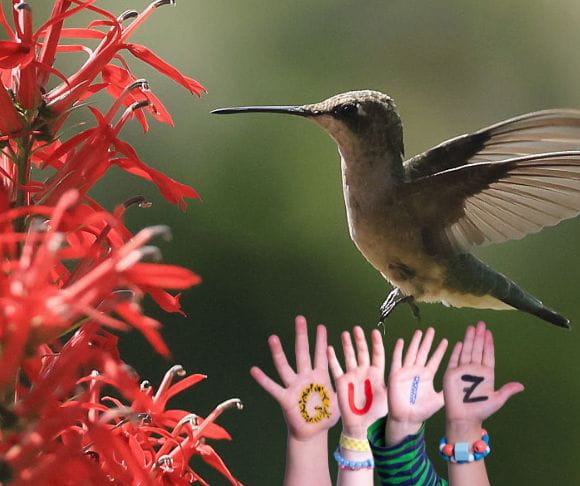
(Photo by Bruce Bennett/Getty Images)
When spring returns, so do the hummingbirds. A variety of hummingbird species exist in many parts of the world, including Argentina, Brazil, Mexico, and the United States. They are known for their small size, fast wingbeat, and the humming sound created as they flap their wings at immense speeds. Hummingbirds are the smallest known and smallest living birds. The nectar-loving creatures have a high metabolic rate and can control their internal body temperature regardless of outside conditions. Their brightly colored feathers (typically only those of the males) have led each species to be assigned fun and exotic names such as coquette, fairy, and sapphire.
The Hovering, Sipping, and Pollinating Hummingbirds
Much like bees, hummingbirds spend their days flying from flower to flower, sipping up the delicious nectar and pollinating the plant to allow for fertilization and the production of seeds. There are more than 300 species of hummingbirds throughout the world, and each has diverse features based on habitat and general climate. All species, however, have much in common as well.
One feature all hummingbirds possess is small size. Some species are larger than others, but even at their biggest, they are not sizable birds. The largest is the northern giant hummingbird, and by giant, we are talking 0.8 ounces (22.68 grams) in weight. The bee hummingbird, which weighs an astonishing 2 grams, holds the record as the smallest living bird.
Despite their size, these birds possess rather interesting traits. For instance, they can hover as well as fly backward, forward, and straight up and down due to highly mobile shoulder joints and a unique wing structure. These tiny birds with a hefty sweet tooth can also adjust their internal body temperature as a form of energy conservation and survival. On cold nights, the birds go into a state of torpor, or slowed physical or mental activity, though not every hummingbird species does this. This allows them to reduce their body temperature and metabolic rate, in turn reducing energy use and allowing them to go for a longer amount of time without food. Hummingbirds must eat quite often because they expend so much energy when hovering and flying. They consume ten times more oxygen per gram of muscle tissue than top human athletes. For this reason, the birds love to sip on the sweet syrup that plants produce. Unfortunately, it becomes a full-time job for the little fliers because their bodies oxidize sugar into flight muscles at a very rapid rate, causing them to need refueling much more often.
The remarkable wingbeat of these animals explains their high rate of energy usage. All hummingbird wingbeats happen in a figure-eight motion. Depending on the size of the bird, the number of flaps per second varies. For the larger of the species, an average of 10 to 15 beats per second has been noted. However, for the smaller birds, numbers as high as 80 beats per second have been recorded. Imagine up to 80 wing flaps every single second! No wonder they need sugar.
 Another commonality among different hummingbird species is coloring. Females tend to have dull-colored feathers, while the males appear in all the colors of the rainbow. The reason? Males, with their colorful gorget (a patch of iridescent feathers on their throats), use it for display, species recognition, and courtship.
The vibrant colors found on hummingbirds inspired 19th-century British naturalist John Gould to assign them equally vibrant names. Gould created “A Monograph of the Trochilidae,” a book of names and finely painted illustrations of the hundreds of hummingbirds he identified. “Gould plates” was the name given to his beautiful pictures, in which the naturalist assigned names such as Emerald, Jade, Aurora, and the Majestic One, relating to the colors and behaviors of the species-specific birds.
Diet, Family, and Habitat
It is not uncommon to see specialized hummingbird feeders filled with a sweet, typically red syrup to attract the speedy fliers. But nectar and sweet syrup are not the only things they feast on. Hummingbirds are classified as omnivores because they also eat insects and spiders sources of protein.
When it comes to family and social interactions, hummingbirds prefer to remain solitary. Males do not typically take part in babies or nesting, aside from occasionally defending the mother. Mama birds build a small, cup-shaped nest appropriate for the size of her eggs and future little ones. It takes between 14 and 23 days for the eggs to hatch, and the babies will remain in the nest for another 18 to 22 days. The mother will feed the babies small insects and nectar until they are strong enough to forage on their own. Sometimes she will feed them even after they have left the nest. The temperature and habitat dictate how long it takes for young birds to be self-sufficient.
Hummingbirds can be found in 29 countries around the globe, though they are found exclusively in North and South America. Unlike many animals, hummingbirds can survive in a variety of habitats. It is not uncommon to see one flying in an urban garden or even in tropical rainforests, deserts, or mountainous areas. Their main goal is to find nectar. Their chosen homes and migrating patterns are decided on the abundance of nectar in the area, so they frequent warmer climates where flowers are in bloom and insects are abundant.
Hummingbirds may be small in size but abundantly fascinating. Equipped with unique flight abilities, rapid wingbeats, colorful plumage, and pollinating skills, they are truly remarkable birds.

- Hummingbirds are great pollinators.
- Hummingbirds can flap their wings at a speed of up to 80 beats per second.
- Male hummingbirds are equipped with brightly colored feathers.