The Yellowthroat — A Curious Songbird on the Ground and in the Air
Males put on a colorful show for their female audience.
By: Kirsten Brooker | January 22, 2026 | 801 Words
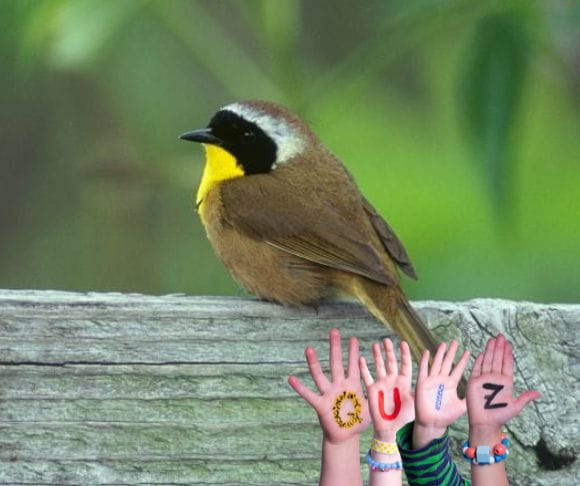
(Photo by: Universal Images Group via Getty Images)
What is short, stocky, weighs around 0.3 ounces, and goes by the nickname “yellow bandit”? If you guessed yellowthroat, you would be correct! These tiny warblers are known for being highly energetic, vocal, and protective little creatures. Thanks to the dark-colored pattern across their eyes, they have earned the nickname the yellow bandit. The birds live in the prairies, wetlands, and grasslands of North America, South America, and Central America and are recognized for their elaborate flying skills.
Yellowthroats – Special Songbirds
There are several reasons why yellowthroats are special. They not only display beautifully colorful plumage but also they exhibit magnificent flying capabilities and have a knack for making glorious music. The males of the species are especially good at singing, and they excel at putting on fantastic flight shows. Both performances are meant to attract females and claim ownership of both their lady and their nest.
One of their specialties is “flight song.” This maneuver has the male flying 10 to 20 feet into the air and gliding back down slowly with wings and tail spread proudly. On his way, he sings a tune that sounds like “witchity-witchity-witchity.”
During breeding season, the males perform a “zap flight.” This movement entails quick swoops back and forth, while calling to the females who are watching from the brush below. A male who can impress a female counterpart proves to her that he is worth her acceptance and can provide her a family and a home.
Male yellowthroats are blessed with several great talents, but females have a few, too. Both male and female are amazing providers for their young. They are great foragers and excellent nest builders. They have a special way of gathering food known as “spot gleaning.” This method is different from that of other birds that hunt mid-flight. Instead, yellowthroats hunt on the ground. They slowly creep through thick vegetation and pick off prey as they move along. They are patient hunters, which often pays off with a hearty meal. Perhaps the female’s greatest skill is constructing the nest. She uses her beak to tie knots in small twigs and grasses, then weaves together the knotted grasses to make a cup-shaped nest with a small tube-shaped entrance in the top for entry. The intricate entryway is designed to deter predators from attacking the eggs or babies that reside in the home.
Basic Information on a Common Yellowthroat
Appearance
 Yellowthroats are small and round creatures. They weigh approximately 0.3 ounces and are an average four to five inches in length. Both males and females have yellow plumage on their throats, though males feature a black/chestnut band around their eyes. The warblers (small insectivorous songbirds) have thick necks and medium-sized tails and are typically olive/brown (females) or yellow/olive (males) in color.
Behavior
Yellowthroats are joyous birds. They spend more time on land than they do flying, mostly because they hunt on the ground and it keeps them safely hidden from potential predators. Though they sometimes hang out in flocks, they are primarily loners.
Migration
Those yellowthroats that live in warm places like Mexico, Central, and South America do not migrate much. Though the birds that live in the colder states in North America and Canada will fly to warm climates during the cold winter months.
Diet and Predators
Yellowthroats are insectivores, which means they primarily eat different types of insects. Occasionally, they will eat some seeds if other food sources are in short supply. The birds’ favorite insects include grasshoppers, dragonflies, mayflies, beetles, spiders, ants, termites, butterflies, and larvae, among others.
 Female yellowthroats prefer mosquitoes to feed their young. Mosquitoes are typically prevalent in the marshy areas where warblers live. Mothers will gather mouthfuls at a time to take back to the nest for the babies.
The primary predatory threats to yellowthroats are wildfires, deforestation, home and farm drainage, construction, and hurricanes. As far as animal predators go, large birds of prey pose the greatest danger. However, the eggs and babies in the nest are preyed upon by snakes, raccoons, turtles, mice, skunks, opossums, and chipmunks.
Population
Other than a few species of yellowthroat (the Altamira is listed as “near-threatened” and the black-polled and Belding’s are “vulnerable”), the population is not threatened. There are approximately 77 million common yellowthroats in existence and an unknown but healthy number of the other 12 species.
Yellowthroats are a thriving population of beautiful songbirds. Their special skills on the ground and in the air help them to stand out from other small warblers. Both the female and male possess special skills that aid in survival. And who doesn’t love a bird that puts a dent in the mosquito population?

- Yellowthroats are native to North America, Central America, and South America.
- Male yellowthroats have exceptional singing and flying skills.
- Yellowthroats prefer to feed their young mosquitoes.