A Primer on Primaries – What They Are and Why They Matter So Much
These early elections are chaotic, but there’s a method to the madness.
By: James Fite | June 10, 2026 | 1340 Words
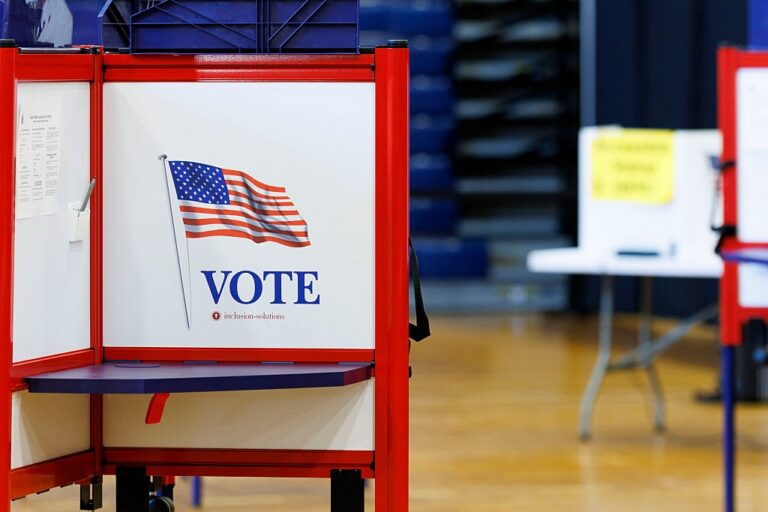
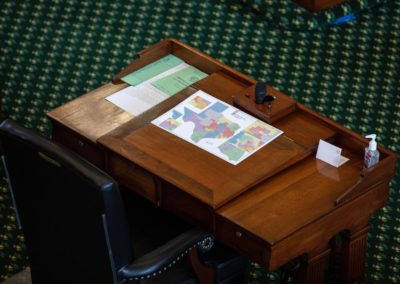
(Photo by CJ Gunther/Getty Images)
Whether it’s the every-four-year presidential election or the so-called “midterms” that fall every two years between them, or even odd-year elections that barely make the news, the general election in November is usually the one most of the nation pays attention to. But there’s another, earlier version that’s just as important – and maybe even more. The primaries stretch from Iowa’s caucuses in February to Louisiana on Nov. 3, and each party in each state has its own way of doing things. So what are the primaries, and what makes them so different from other elections?
The Principles of Primaries
General elections are set by law. Certain elections — such as for the president, the Senate, and the House of Representatives — are established by the US Constitution. Some parts of those elections and others are further regulated by laws passed by Congress. And for local elections, state legislatures or city councils set the rules. These are the elections that determine the final outcome of who holds what office.
The primaries, generally speaking, are for each party to determine which candidate will run as its representative in the general election. The individual states organize the elections and count the votes – but the official party leadership makes most of the decisions on how. In fact, in some states, the parties themselves decide whether to even hold a primary at all (though in some states they are required by law). The big difference, of course, is the goal. Since the general election is about figuring out who is going to hold a local, state, or federal office, the government is in control entirely. Since primaries are about deciding which candidate a party wants to run in the general election, the parties themselves are largely in charge.
Because the laws regulating the primaries vary from state to state – and the details are handled mostly by individual parties at the state level – the process can seem quite chaotic. There are several different kinds of primaries:
Closed Primaries: Only registered party members can vote. This means if you want to vote for who gets to run as the Democrat or Republican – or even for a third party like the Libertarians – you must be a registered member of that party.
Open Primaries: Any registered voter can participate in any party’s primary – no matter what party they belong to or don’t belong to. So if you’re an unaffiliated voter, you can participate in Republican or Democratic Party primaries – or anyone else’s – so long as you vote only once. You can’t, for example, declare yourself unaffiliated and vote in both Republican and Democratic primaries.
Crossover Voting: Open primaries do create a possible issue. Crossover voting is when a member of one party (for example, a registered Democrat) votes in another party’s primary (so sticking to this example, let’s say the Republican one) in hopes of getting a weaker candidate on the general election ballot so his or her party is more likely to win. Some states have laws explicitly forbidding this: If you’re a registered member of a party, you can vote only in that primary – and unaffiliated voters who vote in one primary must stick with that party in the general election or potentially face legal consequences.
Nonpartisan and Multi-Party Primaries – Often Called Jungle Primaries: All candidates appear on the same ballot, and voters can choose any candidate regardless of party affiliation. In multi-party states, the top two or four candidates, regardless of party, then go on to a final primary contest, or runoff.
Caucuses: Finally, some states use caucuses, though mostly these are for presidential nominations. In a caucus, the party holds a convention, and members show up to debate about and select the person they want to be their party’s presidential candidate in the general election – no state-regulated primary election required.
The California Slow Count
Many states hold the primaries for the Republican Party and the Democratic Party at different times, meaning that county and state election officials have more time to count the votes. As you can probably imagine, nonpartisan or multi-party states – or ones that hold both major party primaries at the same time, even if they are separate – can get confusing.

(Photo by Leonard Ortiz/MediaNews Group/Orange County Register via Getty Images)
This is the case in California, which has a nonpartisan “jungle primary.” To make matters worse, the state also has universal voting by mail, and ballots can be received as late as June 9 – a full seven days after Election Day on June 2 – so long as they are postmarked (put in the mail) by the second.
Add that to California having the largest population of any state in the Union, and it’s no wonder it takes a while to count all those votes. In fact, it could take up to 30 days to fully verify and count all ballots. So even a week after Election Day, Californians still don’t know all the results. The contests for governor, lieutenant governor, insurance commissioner, and multiple seats on the board of equalization remain undecided a week after Election Day, as do hundreds of county and local contests with hundreds of thousands of ballots believed to still be uncounted. This process has led some to allege corruption and fraud. But whether such fraud exists or not, it’s still an inefficient process!
Why It Matters
So why do primaries matter so much? Every state has some portion of the population who votes only for candidates from one party. In some states, in which one party holds the loyalty of such a large number of voters, it almost doesn’t matter whom the party chooses – that’s who will win in the general election. So whoever wins the primary is likely guaranteed to win in November.
In Arkansas, for example, it almost doesn’t matter who runs for a statewide office like governor or secretary of state, or a federal office covering all districts in the state, like the US Senate or presidency. Recent history shows that whoever the Republican Party puts forth is who will win in the general election come November. In New York or California, it’s the exact opposite: Democrats are almost guaranteed to win those offices, no matter who they are.
There are also, however, unaffiliated or independent voters. They pick their candidates based on the candidates themselves or how the parties in general have handled certain issues. In the states where there are enough independents to sway the general election from year to year, the primaries are important for an entirely different reason: In solid blue (Democrat) or red (Republican) states, the primaries are like the general election. In the others – what we call battleground or swing states – independents may heavily influence the final election, so an unpopular candidate can mean a party that otherwise might have won in November loses instead.
California may be dominating the headlines right now because of the counting chaos, but the real states to watch are the battlegrounds. So far this year, there seem to be quite a few – but the top races to watch are the Senate contests in Georgia, New Hampshire, and Pennsylvania, Senate and governor in Michigan, governor in Arizona and Nevada, and at least five seats in the House of Representatives in New York.

- While general elections decide who wins a certain office in government, the primary elections (and caucuses) are for each party to pick who it wants to run as its candidates in the general election.
- The general elections all happen on the same day – it’s set by federal law. But the primaries stretch from February all the way to early November.
- The primaries are important in some states because they help determine the outcome of the general election – a bad candidate can cost a party the whole election. In others, where one party holds more of the people’s loyalty, they might as well be the general elections.