Romanticism — An Emotional Era of Poetry
Passion and creativity were favored during this unique period.
By: Elizabeth Lawrence | February 2, 2026 | 571 Words
(Photo Credit GettyImages)
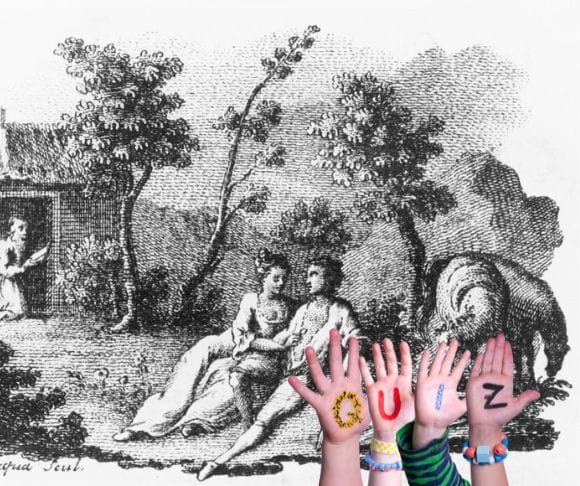
After neoclassicism dominated the literary arts with logic and reason, a new age focused on nature and emotions emerged in the late 18th and early 19th centuries: Romanticism. Unlike poetry written during the Enlightenment, which followed strict rules and emulated ancient Greek and Roman styles, Romanticism celebrated spontaneity and creativity.
Romanticism
Like other eras of poetry, the precise beginning of the Romantic movement is unclear. Several events contributed to its rise in popularity, including a growing interest in folklore, backlash against the rigidity of neoclassicism, and nationalism spurred by political incidents and uprisings.
Individualism, an appreciation of nature, idealism, passion, and curiosity about the supernatural were all common themes found in Romantic era literature. A Brief Guide to Romanticism at Poets.org explained: “Romantics set themselves in opposition to the order and rationality of classical and neoclassical artistic precepts to embrace freedom and revolution in their art and politics.”
Romantic Poets
The Romantic movement produced numerous well-known poets who are still admired today, including Walt Whitman, Emily Dickinson, and Henry David Thoreau. Other Romantic poets include Friedrich Schiller, Johann Wolfgang von Goethe, Samuel Taylor Coleridge, Percy Bysshe Shelley, and John Keats.
 While the word “romantic” typically conjures images of love and positivity, the poetry movement of the same name wasn’t always sunshine and rainbows. Romantic poetry often maintained its passion while exploring negative emotions, like melancholy and despair. Arguably, no poet in history pulled off this combination better than Edgar Allan Poe.
The Tomahawk Man
While Edgar Allan Poe is now best known for his short stories and poetry, to those who knew him throughout his life, he was an editor and a critic, who earned the nickname “Tomahawk Man” due to his critical reviews.
One such examination targeted his fellow poet, Henry Wadsworth Longfellow: “The fact of the matter … Mr. Longfellow and Other Plagiarists … is that the friends of Mr. Longfellow, so far from undertaking to talk about my ‘carping littleness’ in charging Mr. Longfellow with imitation, should have given me credit, under the circumstances, for great moderation in charging him with imitation alone. Had I accused him, in loud terms, of manifest and continuous plagiarism, I should but have echoed the sentiment of every man of letters in the land beyond the immediate influence of the Longfellow coterie.”
Poe’s penchant for poetic writing was obvious in his critiques, but his best work was reserved for renowned poems like The Raven:
Once upon a midnight dreary, while I pondered, weak and weary,
Over many a quaint and curious volume of forgotten lore,
While I nodded, nearly napping, suddenly there came a tapping,
As of some one gently rapping, rapping at my chamber door.
“‘Tis some visitor,” I muttered, “tapping at my chamber door-
Only this, and nothing more.”
The poem goes on to describe the dark and spooky experience of a man drowning in grief over the death of his beloved Lenore. When he is visited by a mysterious talking raven one stormy night, he is driven deeper into despair by the raven repeating one word: “Nevermore.”
Poe’s haunting rhythm and almost musical language show how Romantic poets rejected Enlightenment restraint in favor of intense feeling. Romanticism proved that poetry did not need to be orderly to be meaningful.

- Romanticism celebrated passion, spontaneity, creativity.
- Popular Romantic poets include Edgar Allan Poe, Walt Whitman, and Henry David Thoreau.
- Edgar Allan Poe wrote the renowned Romantic-era poem The Raven.