Why Is December 25 Christmas Day?
The short answer is we don’t know – but there are theories.
By: James Fite | December 25, 2025 | 747 Words
(Photo by Selcuk Acar/Anadolu Agency via Getty Images)
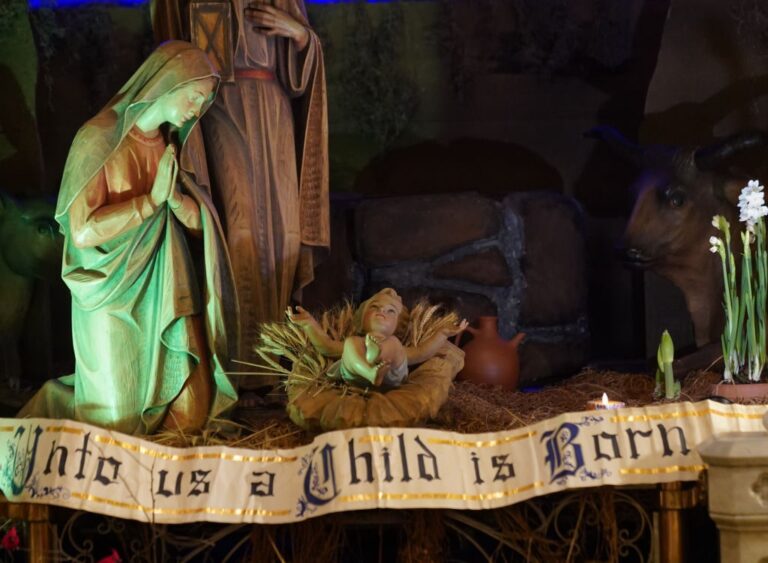
As the classic Christmas song says, “Christmas comes but once a year” – and that day is December 25. The holiday is celebrated worldwide as the birthday of Jesus, but no matter how hard you search, you won’t find that date in the Bible. So how did that become Christmas?
A Spring Birth?
In the Jewish calendar, the year begins with the month of Nisan, which starts around late March or early April in the Gregorian calendar. It varies from the Gregorian calendar because the lunar cycle and solar cycles don’t always match up, and Nisan officially begins with the new moon. It’s a time associated with new beginnings, redemption, and God’s presence. Passover, the Jewish holiday celebrating the Israelites’ freedom from slavery in Egypt, falls in Nisan, and Easter is often at the end of the month or right after.
Many scholars believe Jesus was born in the spring, specifically in the month of Nisan and perhaps even on the Spring Equinox (March 25, in the Gregorian calendar). The Bible tells of an angel appearing to shepherds who were out in the fields at night with their flocks to announce the birth of Jesus. The theory goes that, had it been winter, it would have been too cold for the shepherds to keep their sheep out in the fields. This does seem to point to either spring or fall – and the lambing season is spring. Combine that with the association of spring with fresh beginnings and another theory that Jesus died on his birthday, and it’s no wonder many believe this.
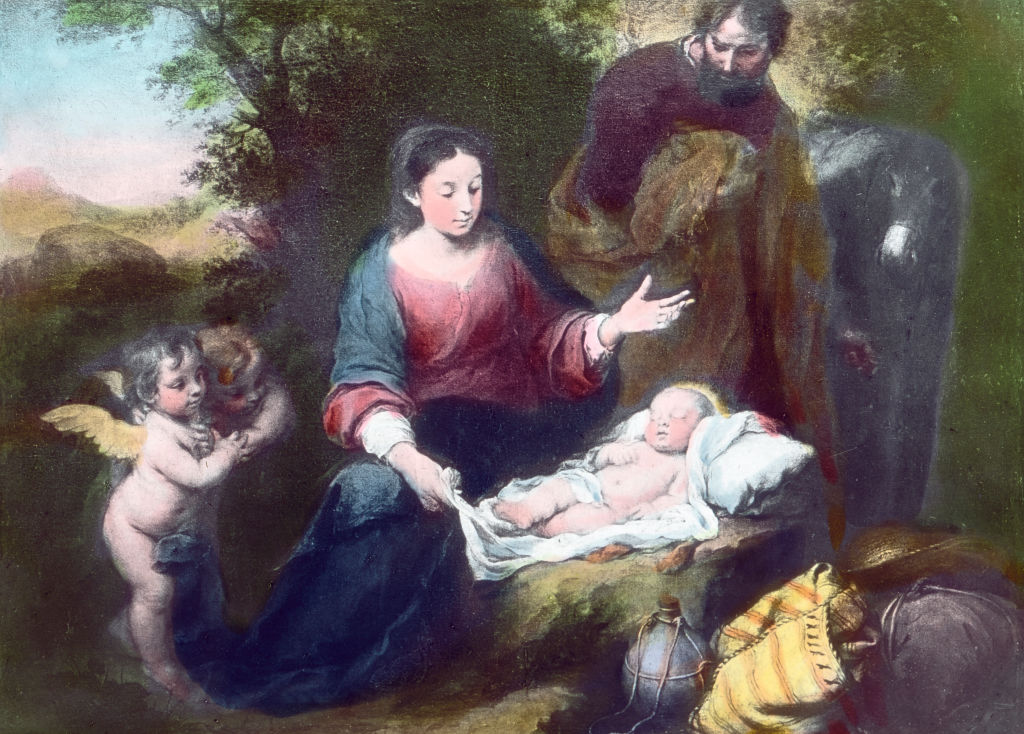
If the star of Christmas wasn’t born in the winter, why would we celebrate his birth in December? Well, one theory is that the early church chose to mirror Roman holidays to make conversion to Christianity easier and more appealing. Another related theory is that it was chosen to give believers something to do while the pagans were having their festivals. Either way, these theories – believed by many both inside the Christian world and outside it – place Christmas on December 25 because of the Roman holidays Sol Invictus (the Unconquered Sun) and Saturnalia (a mid-December feast honoring Saturn).
(Photo by: Carl Simon/United Archives/Universal Images Group via Getty Images)
These are the theories put forth by the Billy Graham Evangelistic Association and the Biblical Archaeology Society, among other religious and non-religious organizations. But they are far from conclusive. Historical writings show even early church leaders weren’t sure when Jesus was born.
Christmas as the Birthday
There’s a problem with the pagan holiday theory, though: The earliest known claim that Christmas was deliberately set at the time of pagan feasts was from the 12th century. Early church leaders in the first century shunned birth celebrations, and, by the third and fourth centuries, a wide range of dates was being used. Some thought it was January 6, while others believed it was March 20, or even – you guessed it – December 25. In fact, Hippolytus of Rome, who lived from AD 204 to 235, specifically documented December 25 as the birthdate of Jesus in his works, including in the Commentary on Daniel and Chronicon. Saturnalia predated this, but was celebrated on December 17, and Sol Invictus wasn’t established until AD 274.
The translated passage from Hippolytus’ book reads:
“For the first advent of our Lord in the flesh, when he was born in Bethlehem, was December 25th, Wednesday, while Augustus was in his forty-second year, but from Adam, five thousand and five hundred years. He suffered in the thirty-third year, March 25, Friday, the eighteenth year of Tiberius Caesar, while Rufus and Rebellion were Consuls.”
Whatever theory you believe, we can’t know for sure if Jesus was born on December 25 or, if He wasn’t, why that date was chosen. There simply isn’t enough proof one way or the other. Any one of these theories is as likely as any other. The important thing, of course, is the reason we celebrate Christmas – not the date. And who knows, maybe it really is Jesus’ birthday!

- Christmas is a celebration of the birth of Jesus, but it may or may not accurately represent his birthdate.
- Some theories do place Jesus’ birth on December 25 – including some very ancient documents – while others believe he was born in the spring.
- Those who don’t believe the December 25 theory often do believe that date was chosen because of pagan holidays during the Roman empire’s conversion to Christianity.