When Did We Start Using Punctuation?
National Punctuation Day is Wednesday, Sept. 24.
By: Kirsten Brooker | September 24, 2025 | 530 Words
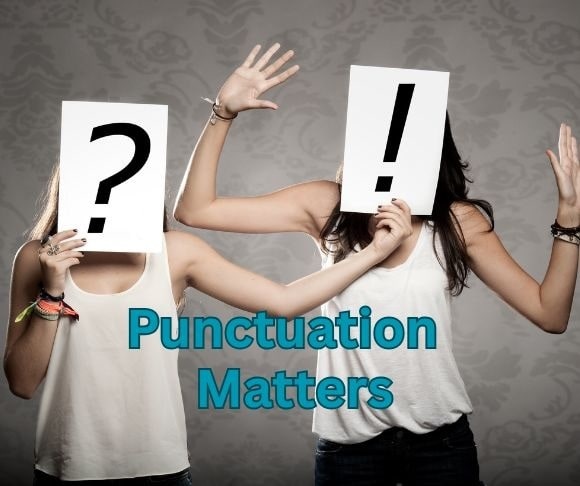
Sept. 24 is set aside each year to honor punctuation. It may seem odd, but punctuation is a valuable tool that clarifies writing and reduces confusion and misconception. The earliest known use of punctuation is found on the Mesha Stele (also called the Moabite Stone) from around 850 BC. The text was written on a four-foot-tall black stone and contained the testament of King Mesha of Moab. The text used points to indicate pauses and horizontal strokes between the sections of writing. It wasn’t until the Bible began being widely published that the use of punctuation marks began spreading to other civilizations.
The Value of Punctuation
In the early days, most communication was verbal. There was no need for punctuation because writing was not common. However, that began to change over time. After the Mesha Stele, the next civilization to utilize punctuation was the Greeks in 200 BC. Before, they used unending strings of text described as “scriptura continua.” It became apparent that pauses needed to be indicated to help readers better understand what they were reading.
 When the Bible began to be mass-produced, punctuation took on a whole new meaning. Bibles were intended to be read aloud to an audience, so it became clear that marks were necessary to aid the reader. Textual symbols such as the diple (quotation marks), paragraphos that mark a division in text, indentations, and even capital letters were a big help. Over the next several centuries, there were several additions to punctuation. The rise in printing in the 14th and 15th centuries underscored the urgent need for standardized punctuation.
Venetian printers Aldus Manutius and his grandson are credited with creating a standardized system and writing a book that explained how to use the marks. They popularized the use of full stops (periods) and colons and invented the semicolon and the comma. They also threw in a couple of uses for parentheses. In the 19th century, Cecil Hartley wrote a poem that would assist writers in the use of punctuation:
The stop point out, with truth, the time of pause
A sentence doth require at ev’ry clause.
At ev’ry comma, stop while one you count;
At semicolon, two is the amount;
A colon doth require the time of three;
The period four, as learned men agree.
National Punctuation Day
Because of its value, punctuation is honored on Sept. 24 for its contribution to writing and to readers, who depend on it to clarify what they read.
Founded by Jeff Rubin in 2004, National Punctuation Day promotes the correct use of punctuation in writing. He encourages readers to send in errors they spot in newspapers, signs, magazines, and websites. Teachers and students are encouraged to find fun, interactive ways to improve their punctuation skills.
On Wednesday, Sept. 24, join in on the celebration by participating in National Punctuation Day events and challenges.

- The earliest known use of punctuation is found on the Mesha Stele (also called the Moabite Stone) from around 850 BC.
- It wasn’t until the Bible began being widely published that the use of punctuation marks began spreading to other civilizations.
- Founded by Jeff Rubin in 2004, National Punctuation Day, celebrated Sept. 24, promotes the correct use of punctuation in writing.