Victorian Poetry
Sound and entertainment took center stage during this era.
By: Elizabeth Lawrence | February 9, 2026 | 569 Words
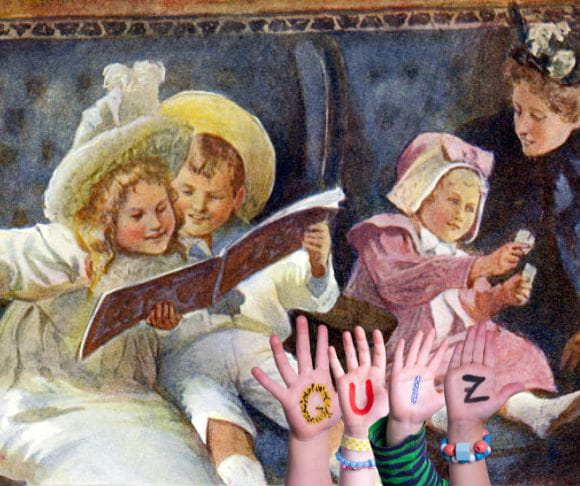
(Photo by Culture Club/Bridgeman via Getty Images)
The Victorian era of poetry took place during the reign of the United Kingdom’s Queen Victoria, running from 1837 to 1901 after the Napoleonic Wars and before the beginning of World War I. Victorian poets kept many of the Romantic era’s themes while developing their own style that set them apart.
The Characteristics of Victorian Poetry
Victorian poetry has several defining characteristics: It is musical, visual, detailed, socially engaged, and designed to entertain.
Sound and music were essential in Victorian poetry, particularly rhythm and effects. Many of the era’s poems were derived from ballads, church hymns, and parlor music, and the poems themselves were even often printed as “songs.”
Victorian poetry also focused on the visual, with poets practicing “word painting:” the use of vivid imagery to appeal to the reader’s imagination. This approach was influenced by Romantic-era writers and the visual arts.
The era’s poetic style rose to popularity amid major developments in photography, early sound recording, geological discovery, and evolutionary science. It was also heavily influenced by social issues of the day, including double standards related to men and women, poverty, war, class differences, and spirituality.
 More than anything, Victorian poetry sought to entertain. However, according to University of Iowa Professor Florence Boos, late-Victorian poetry grew more detached and disillusioned. “The artist was often portrayed as an observer or even outcast, as in Oscar Wilde’s The Ballad of Reading Gaol. Rejecting grand systems and metaphysical certainty, poetry emphasized themes of isolation, repression, suffering, and pain,” Boos explained. “Poets were concerned with the desecration of nature, the anomie of urbanization, the alienation of distant imperial wars, and the depersonalization of modernity.”
Victorian Poets
Some well-known poets from the Victorian age include Robert Browning, Elizabeth Barrett Browning, Matthew Arnold, Gerard Manley Hopkins, and Oscar Wilde, but perhaps the most iconic Victorian poet was Alfred, Lord Tennyson, a Poet Laureate – the official poetic spokesman throughout Victoria’s reign – who is remembered for his musicality and philosophical depth.
The Poetry Foundation described Tennyson as “one of the three most famous living persons” of his day, along with Queen Victoria and Prime Minister William Gladstone.
“Even his most severe critics have always recognized his lyric gift for sound and cadence, a gift probably unequaled in the history of English poetry,” the Foundation noted.
One of Tennyson’s most poignant poems, Come Not, When I Am Dead, addresses grief after loss from the perspective of someone who has passed away:
Come not, when I am dead,
To drop thy foolish tears upon my grave,
To trample round my fallen head,
And vex the unhappy dust thou wouldst not save.
There let the wind sweep and the plover cry;
But thou, go by.
Child, if it were thine error or thy crime
I care no longer, being all unblest:
Wed whom thou wilt, but I am sick of Time,
And I desire to rest.
Pass on, weak heart, and leave to where I lie:
Go by, go by.
Victorian poetry inherited Romanticism’s appreciation for strong emotions while responding to a dramatically changing world. Poets of the age sought to make sense of modern life without abandoning the literary art’s ability to entertain.

- The Victorian era of poetry took place during the reign of England’s Queen Victoria.
- Sound and music played a central role in Victorian poetry.
- An iconic Victorian poet was Alfred, Lord Tennyson, a Poet Laureate.