The Second Moon Following Earth
Now it seems our “new” neighbor has been around for a while.
By: Dave Patterson | October 27, 2025 | 593 Words
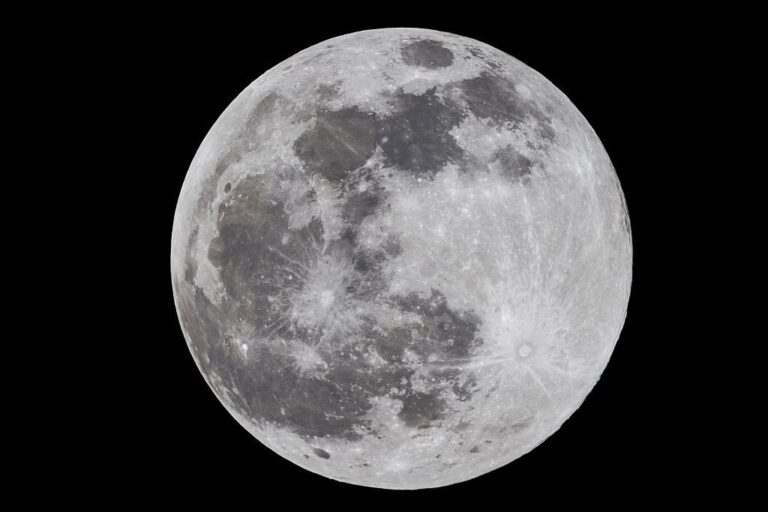
(Photo by Rick Kern/Getty Images)
Astronomers have discovered another “moon” orbiting the Sun with the Earth. It’s small and asteroid-like with a track similar to Earth’s orbit around the Sun. Astronomers have named the object 2025 PN7, informally referred to as “Buwan,” which is Tagalog (the language of the Philippines) for “Moon.” The quasi-moon is not likely to be the subject of song titles as our good ‘ole true lunar orb. However, the discovery is intriguing and warrants further understanding.
Astronomers Find a New Moon in Our Galaxy
What’s going on in our galaxy is a subject that should pique the young readers’ interest. Finding a new moon relatively close to Earth, in galactic terms, is just such a topic. News Nation reported that the University of Hawaii astronomers at the Haleakala Observatory in Hawaii discovered 2025 PN7 on August 2, 2025, using the Pan-STARRS 1 telescope. The quasi-moon is different from Earth’s true Moon in that there is no gravitational attraction to the Earth keeping the new moon bound in its orbit. Still, Buwan has, for over half a century, been in an orbit around the Sun that is nearly identical to Earth’s, taking about one year to complete.
As Northeastern Global News explained, “The quasi-moon has likely been our close neighbor for some 60 years, experts say. But the asteroid is so small that it can hardly be seen without a large telescope that is also capable of scanning large areas of the sky, says Northeastern University astrophysicist Jonathan Blazek.” Furthermore, 2025 PN7 will remain in its orbit for about another 60 years before drifting in space, drawn away by the gravitational pull of other planets and stars.
 Because of the nature of 2025 PN7’s slightly elliptical (not quite circular) orbit, the distance from Earth varies considerably. At its closest, the distance between Earth and the quasi-moon is 182,390 miles. That’s about the same as geostationary man-made satellites orbiting Earth. When 2025 PN7 is at its farthest from Earth, it’s more than two million miles away. The quasi-moon is small. It measures approximately just 62 feet in diameter, which, when compared with the real moon, is really small. It’s estimated to be just the size of a small office building.
Other Quasi-Moons
According to the published Research Notes of the American Astronomical Society, 2025 PN7 is one of seven, possibly eight, asteroid-like rocks that make up the Arjuna asteroid group. The Arjuna asteroids are a loosely grouped astronomical community of near-Earth objects (NEOs) in circular tracks that resemble Earth’s orbiting around the Sun. Like many other Arjuna asteroids, 2025 PN7 “appears to loop around Earth while actually orbiting the Sun.” Furthermore, the Arjuna asteroids are only visitors to their orbits around the Sun, staying in position for decades, as in the case of 2025 PN7, or for centuries, before the dynamic gravitational pull of the Sun, Venus, Jupiter, and other planets move them away from close proximity to Earth.
As technology advances, we might someday be able to mine resources from near-Earth asteroids. Even now, though, they’re of interest and can help us better understand the space around us. At any rate, welcome to the neighborhood, 2025 PN7, AKA Buwan.

- NASA recently discovered a “second moon,” which is actually a small asteroid on a similar orbit to Earth that astronomers call 2025 PN7 or Buwan.
- Even though we didn’t know it was here, scientists now believe Buwan has been around for about 60 years and won’t leave this orbit until about 2083.
- Buwan is part of a group of asteroids called the Arjuna group.