The Science and History of Fire
Earth is the only planet where fire exists.
By: Kirsten Brooker | February 12, 2026 | 537 Words
(Photo by Ethan Swope/Getty Images)
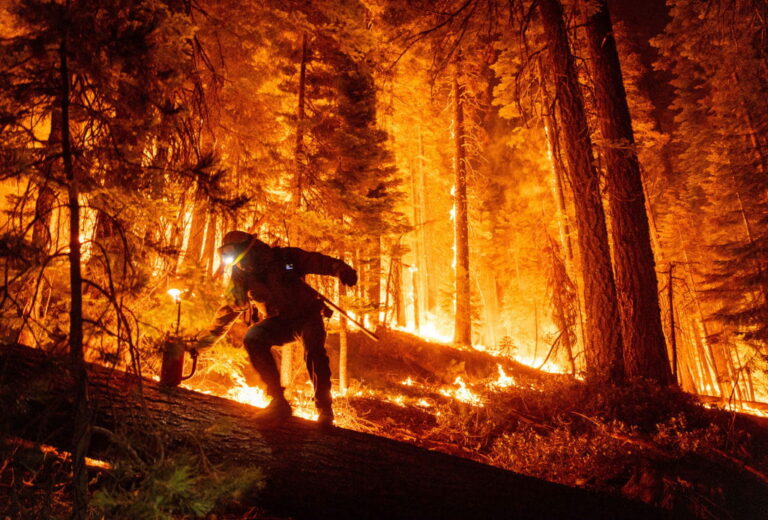
Who doesn’t love to cozy up next to a warm fire or eat a delicious meal that was prepared over an open flame? Fire is something that has assisted earthlings in survival for many years. But when did fire begin, and what is needed for it to exist? These questions will take us back 470 million years to the Middle Ordovician period, where ancient fossils show signs of the first existence of fire.
Heat, Fuel, and Oxygen – The Requirements for Fire
For fire to occur, three components must be present. Fire cannot burn without heat, fuel, and oxygen. The first essential factor is heat, which can come from lightning, a spark, or an open flame (lighter or matches), among other things. Lightning was likely the source of the heat that started wildfires all those years ago. But heat alone cannot keep the fire burning.
The second essential component is fuel, a solid, liquid, or gas that allows the fire to stay lit and active. Before plants, there were no photosynthetic organisms on Earth. Therefore, scientists directly relate the earliest fires to the first plants that began to grow and emit oxygen.

(Photo by Brandon Bell/Getty Images)
Which leads to the third and final required ingredient for a fire – oxygen. No other planets besides Earth contain enough oxygen to allow for the survival of plants, animals, and humans, meaning fire does not exist anywhere else in our solar system. Fire burns when the atmosphere contains at least 13% oxygen, and Earth’s current atmospheric oxygen level is 21%. In any scenario, if the level of oxygen reached 30%, it would be incredibly difficult, if not impossible, to put out a fire.
The History of Fire
Now that we know the science behind fire, let’s look at its significance in the history of Earth. Wildfires, while destructive, have been an incredibly useful part of our planet’s past. They are crucial in maintaining a balance in nature and allowing for the survival of a diverse population of plant and animal species. Ancient rocks and fossils show evidence that wildfires began burning millions of years ago. As time went on and early humans roamed the Earth, fire started to play another largely significant role.
Even modern humanity would find it difficult to survive without fire. Many believe Homo erectus, the Earth’s first humans, lived during the Stone Age (approximately 1.4 million years ago) and used fire for heat, light, cooking, and protection. From its basic uses in early times, fire became common in religious ceremonies, cultural traditions, and social interactions. From backyard barbecues to candlelit rituals, fire is ever-present and likely always will be.
Fire is a source of life, crucial to all living things on Earth. As long as its essential ingredients are present, fire will exist. Next time you roast a hot dog over a campfire or hear about wildfires burning, think about the science and history behind one of the most necessary things on Earth.

- Fire requires heat, fuel, and oxygen to burn.
- Scientists believe that fire has existed since about 470 million years ago.
- Humans use fire as a source of heat and light and also for religious and ceremonial purposes.