The Highly Intelligent Dolphins
Like you and me, these creatures of water are part of the mammal family.
By: Kirsten Brooker | April 2, 2026 | 843 Words

(Photo by Sebnem Coskun/Anadolu via Getty Images)
Have you ever been swimming with dolphins? Or maybe you have been near the ocean and seen a pod of them jumping in and out of the sea. Dolphins are a much-loved water species known for their intelligence, grace, beauty, and overall talent. A large range of dolphin species exists in different parts of the world. Perhaps the most well known is the bottlenose dolphin.
History of Bottlenose Dolphins
The term “dolphin” refers to most species in the Delphinidae (oceanic dolphins) family and the members of the river dolphin family Iniidae. The bottlenose dolphin is a part of the genus Tursiops and can be found in 31 different locations around the world. Three types belong to the genus Tursiops: the common bottlenose dolphin, the Indo-Pacific bottlenose dolphin, and the Tamanend’s bottlenose dolphin. The highly intelligent species appeared during the Miocene, between 23 and 5 million years ago. They are toothed whales that inhabit warm and temperate seas worldwide.
Extremely High Intelligence
Dolphins are known for their incredible capabilities. They are highly sociable, exploring the oceans with curiosity and the ability to understand what most animals cannot. For years, scientists have studied the extent of dolphin knowledge, discovering that their cognitive abilities include matching and differentiating sensory skills, comprehension of symbols and gestures, a strong memory, and mimicry (copying movements of another). Some bottlenose dolphins have been known to use tools. For instance, some females have been observed using a sponge to protect their long noses while searching for food on the sea floor. They possess incredible techniques for hunting, such as mud plume and strand feeding, which involve teamwork in catching schools of fish. Some dolphins have been witnessed helping out local fishermen by gathering up the fish and picking off the ones that do not make it into the net.
A dolphin communicates in several ways, including burst pulsed sounds, whistles, and body language. Dolphins do not have vocal cords, so they produce sound by using six air sacs near their blowhole. Each dolphin makes a distinct sound. These sounds are primarily used between a mother and her calf (dolphin baby) and members of the pod to warn of danger or the presence of food. Dolphins will also butt heads, leap out of the water, snap their jaws, and slap their tails on the water’s surface to relay information.
To locate food, dolphins use echolocation, a form of sonar that allows them to determine their location based on the echo. When a dolphin uses clicking sounds, they hit an object in the water, bounce off, and come back, alerting the mammal that something is nearby.
Anatomy and Food Preferences
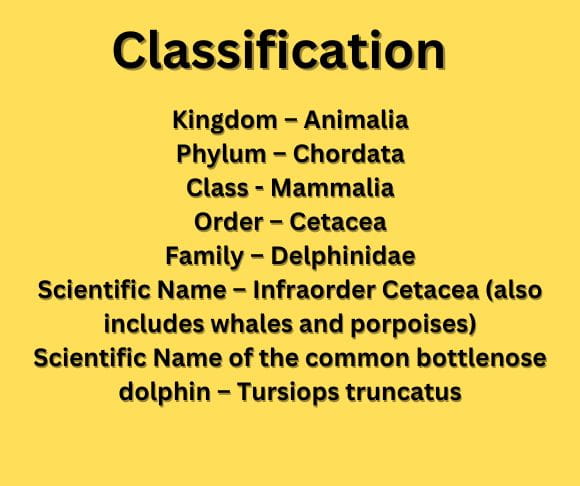 Male bottlenose dolphins average 10 feet 10 inches in length and weigh about 992 pounds. Their female counterparts are often smaller in length and weight (sexual dimorphism). They are most commonly gray in color but can sometimes exhibit a cream, white, blue, or even black hue. Their bodies are smooth and hairless and contain a thick layer of blubber that regulates body temperature, provides energy storage and buoyancy to stay afloat.
Dolphins have long upper and lower jaws that form a rostrum, or snout. The tops of their heads have a blowhole that allows them to breathe air. A dolphin has several fins, and the ones on the side called pectoral flippers help the dolphin to steer. They also have flukes on their tails, which move up and down to propel them forward, and a dorsal fin. Pectoral flippers contain bones and muscle, and the others are made of dense connective tissue.
Dolphins are carnivores. Fish is their favorite meal, but they will indulge in the soft, fleshy parts of shrimp, mollusks, and cuttlefish. Dolphins eat around 22 pounds of fish per day, and they have been observed hunting both in groups and alone.
Popular Among Humans
Dolphins have gained popularity with humans due to their sweet disposition and their willingness to interact. They have been known to rescue injured divers as well as care for other animals that are hurt.
The mammals have a strong cultural influence as well. The TV series Flipper followed the story of a bottlenose dolphin that made friends with two young boys. Films include Dolphin Tale and Dolphin Tale 2, released in the early to mid-2000s. There have been many special dolphin appearances in movies and TV shows over the years as well.
Lifespan and Population
The average lifespan of a dolphin is about 25 years. Those in captivity can live to be up to 50 years old, with females in general living longer than males. The oldest dolphin on record lived in captivity and died at 53.
At this point, dolphins are not in danger of becoming extinct. They must regularly fight off predators such as orcas – which are part of the Delphinidae family – and sharks, and many lives are lost to fishermen’s nets. But there are still a healthy number of them in the world, approximately 600,000.

- Dolphins are mammals in the Delphinidae family.
- Dolphins are highly intelligent animals that live in many parts of the world.
- Dolphins use echolocation when hunting for food.