Renaissance Poetry and History’s Most Famous Poet
The writing that has stood the test of time.
By: Elizabeth Lawrence | January 14, 2026 | 667 Words

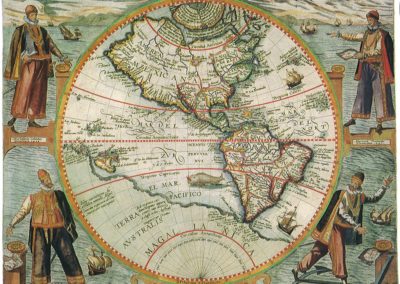
(Photo by GraphicaArtis/Getty Images)
Poetry often brings one prolific writer to mind: William Shakespeare. Arguably the most famous poet to ever put quill to parchment, Shakespeare rose to prominence during the English Renaissance, a period of major cultural change that developed in the late 15th century and lasted until the 17th century. Renaissance poetry was diverse and free of strict rules, covering a broad range of styles still seen in literature today.
Renaissance Poetry
While the exact dates of the English Renaissance are unclear, many researchers agree that it kicked off under the Tudor Dynasty, between 1485 and 1603. The period was marked by political and cultural tensions, particularly between Catholics and Protestants. Scholars note that the era ended when those tensions erupted into civil wars, Charles I’s execution, and the monarchy’s restoration in 1660.
The Renaissance’s long-term impact on literary arts, particularly poetry, is undeniable. According to the Poetry Foundation, increases in literacy and printing led to the development of a distinct style of English literature that included plays, ballads, popular songs, hymns, classical literature translations, and, of course, poetry.
Renaissance poetry was “susceptible to fashions and trends,” the Poetry Foundation explained. Sonnets and short epics known as “epyllions” were popular; odes and satires, followed by monologues and country-house poems, demanded attention.
From “fluent sonic patterns, delightful ornaments, or one startling metaphor after the next” to “a plain style, achieving their judicious effects by withholding any rhetorical pyrotechnics,” Renaissance poetry comes in a variety of forms – in fact, unlike other eras of poetry, there is not just one style.
History’s Most Famous Poet
Born during the English Renaissance, Shakespeare is widely regarded as a genius who brought the Renaissance to life, creating characters in his poetry that were defined by complex internal worlds.
 Take Shakespeare’s Hamlet: the well-known tragedy about a prince who seeks revenge after his father is murdered by his uncle. Prince Hamlet struggles with his internal battle over good and evil, delivering one of the most renowned soliloquies ever written:
“To be, or not to be: that is the question: Whether ’tis nobler in the mind to suffer the slings and arrows of outrageous fortune, or to take arms against a sea of troubles, and by opposing end them?” it reads in part, beautifully capturing Hamlet’s difficult choice between passively accepting life’s injustices or risking death to resist them.
Shakespeare also wrote 154 sonnets, a popular form of poetry during the Renaissance. Rooted in the Italian sonetto meaning “little song,” sonnets are rhyming, 14-line poems that often focus on romance and include hyperbolic or oxymoronic language.
A great example of this is Sonnet 133, in which Shakespeare exaggerates the power of love, suggesting it can steal his very identity and turn him into a slave:
Beshrew that heart that makes my heart to groan
For that deep wound it gives my friend and me:
Is’t not enough to torture me alone,
But slave to slavery my sweet’st friend must be?
Me from myself thy cruel eye hath taken,
And my next self thou harder hast engrossed;
Of him, myself, and thee I am forsaken,
A torment thrice threefold thus to be crossed.
Prison my heart in thy steel bosom’s ward,
But then my friend’s heart let my poor heart bail;
Whoe’er keeps me, let my heart be his guard:
Thou canst not then use rigour in my jail.
And yet thou wilt; for I, being pent in thee,
Perforce am thine, and all that is in me.
Through his daring experiments with language, Shakespeare exemplified the flexibility of Renaissance poetry. The English Renaissance may have taken place hundreds of years ago, but its poetry has withstood the test of time, reminding readers of the enduring truths of human nature.

- Unlike that of other eras, Renaissance poetry doesn’t have a specific style.
- Shakespeare, one of history’s most famous poets, rose to prominence during the Renaissance.
- The exact dates of the Renaissance are unclear, but scholars agree it took place between 1485 and 1660.