Modernist Poetry and Ezra Pound
Difficult to define but determined to “make it new.”
By: Elizabeth Lawrence | February 23, 2026 | 612 Words
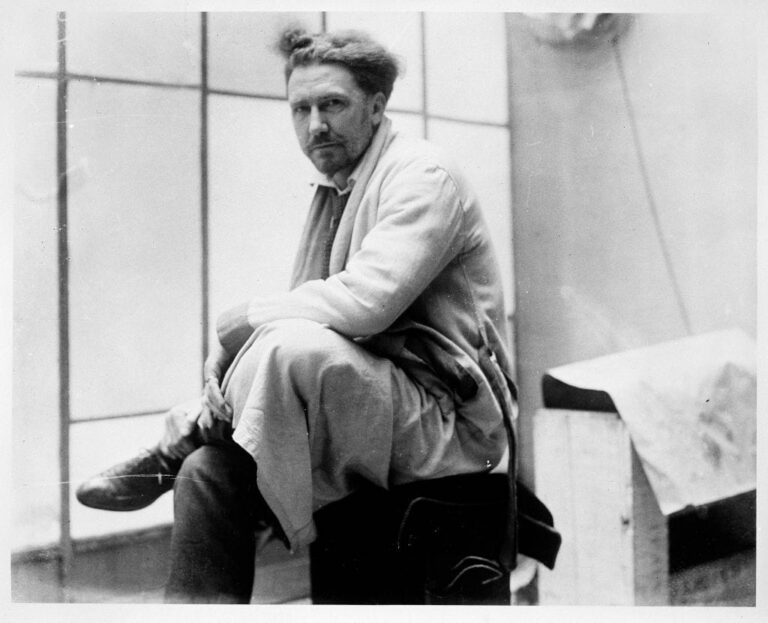
Ezra Pound (Photo by United States Information Agency/PhotoQuest/Getty Images)
With such life-altering inventions as the automobile and incandescent lightbulbs, the world changed dramatically in the early 20th century. Poets, writers, and other creatives whose lives were surrounded by technological advancements believed the arts needed a daring new approach to properly capture the era – and the Modernist movement was born.
Modernist Poetry
Modernist poetry is often described as difficult, various, and complex. The most popular techniques associated with Modernism include free verse, emotional restraint, and layered references to high and low culture, according to the Poetry Foundation, which noted that Modernist poetry is often considered “difficult to read and to define.”
Modernist poets were obsessed with novelty, so much so that one of the movement’s most well-known mottos was “make it new.” Poetry Foundation explained how the slogan highlighted Modernism’s many contradictions:
“For later critics, ‘make it new’ became a shorthand for the movement’s goals, especially its obsession with artistic novelty. But the phrase, attributed to Ezra Pound, wasn’t well-known to the Modernists themselves and, ironically, wasn’t itself new. In fact, it’s an ancient, a translation of a translation: according to the Confucian texts Pound took the phrase from, it was once emblazoned on the bathtub of the first ruler of the Shang dynasty.”
While Modernism itself was complex, many consider its legacy to be clear: Modernist influences are seen throughout the post-World War I period.
Ezra Pound
T.S. Eliot, Gertrude Stein, and Mina Loy are celebrated Modernist poets, but perhaps the most famous of the era was Ezra Pound.
 Born in Hailey, ID, in 1885, Pound was a prominent modernist figure, publishing more than a dozen books. Iconic writer Ernest Hemingway even said Pound’s impact on poetry was so profound that avoiding his influence in the literary art would be “like passing through a great blizzard and not feeling its cold.”
Pound’s poetry included both epics and minimalist stanzas, with much of his writing style reflecting a “stream-of-consciousness” approach. His most renowned work, The Cantos, is a Modernist epic that blends politics, history, and “the periplum,” a term coined by Pound describing the “point of view of one in the middle of a journey.”
In another famous poem titled Salutation, Pound criticizes the wealthy as “thoroughly smug” while contrasting their comfort with the lifestyles of fishermen and their families. The poem serves as a great example of Modernism’s focus on high and low culture:
O generation of the thoroughly smug
and thoroughly uncomfortable,
I have seen fishermen picnicking in the sun,
I have seen them with untidy families,
I have seen their smiles full of teeth
and heard ungainly laughter.
And I am happier than you are,
And they were happier than I am;
And the fish swim in the lake
and do not even own clothing.
While he devoted most of his life to poetry while living in England, France, and Italy, Pound eventually became involved in Italian dictator Benito Mussolini’s fascist politics. He returned to the United States in 1945 and was arrested for treason after allegedly broadcasting fascist propaganda to the United States during World War II.
One year later, he was acquitted, declared mentally unstable, and committed to St. Elizabeths Hospital in Washington, DC. Loved ones appealed Pound’s case, and he was ultimately released in 1958.
Pound passed away in November 1972 and was buried in Italy, on Isola di San Michele, a cemetery island.

- Modernist poetry is often described as difficult, various, and complex.
- Ezra Pound was a prominent modernist figure, publishing more than a dozen books.
- “The periplum” is a term coined by Pound describing the “point of view of one in the middle of a journey.”