May Jobs Report Beats Expectations
The US labor market is holding steady.
By: Andrew Moran | June 8, 2026 | 624 Words
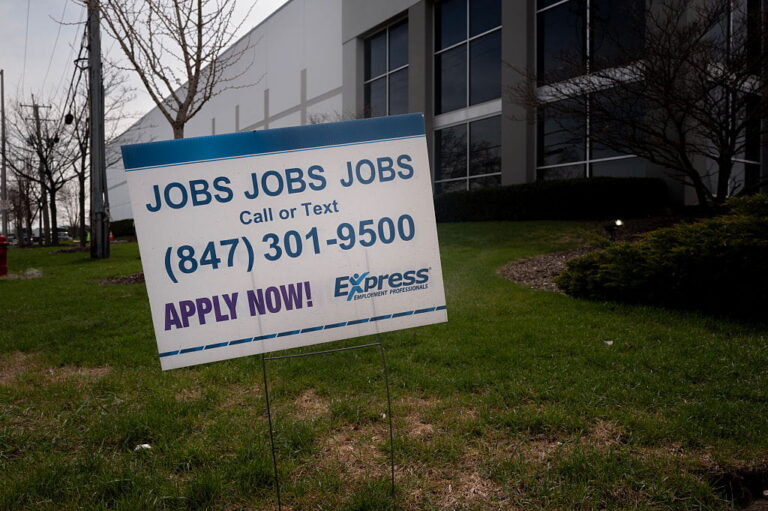
(Photo by Scott Olson/Getty Images)
What a difference a year can make. Following a poor performance in 2025 and a disappointing start to 2026, the US labor market is making a comeback. The private sector is adding jobs, unemployment remains low, and fewer people are being fired. The May jobs report showed that the hiring momentum continues heading into the summer.
May Jobs Report
The nonfarm payrolls report is published by the Bureau of Labor Statistics on the first Friday of every month. The employment numbers are gathered by interviewing approximately 60,000 businesses and government agencies. This helps provide a rough estimate of whether the labor market is accelerating, stagnating, or contracting.
The May jobs report confirmed that employment conditions are improving.
Last month, the economy added 172,000 new jobs, firmly above economists’ forecasts of 85,000. Seventy percent of the jobs came from the private sector, led by leisure and hospitality (70,000), health care (35,000), and manufacturing (7,000).
 The unemployment rate held steady at 4.3%, which was in line with economists’ expectations for the third consecutive month. The number of individuals out of work fell by 66,000 to 7.31 million, while total employment rose by 149,000 to 162.77 million.
Short-term unemployment – those who are out of work for fewer than five weeks – declined by 286,000 to 2.2 million. Long-term unemployment rate – individuals jobless for longer than 27 weeks as a share of total unemployment – edged up to above 27% for the first time in nearly five years.
Labor force participation expanded by 83,000 to 170.08 million, with a rate of 61.8%, its lowest level since October 2021.
Earnings growth struggled in May and is gradually falling behind inflation. Average hourly wages rose by 0.3%, from 0.2% in April. Average hourly earnings, compared to the same time a year ago, eased to 3.4%, from 3.6%.
The federal agency also made upward revisions to previous months’ data. This happens when officials receive additional information from businesses or they were late to respond. The March and April numbers were adjusted higher by 93,000.
What This Means
Overall, the US labor market is warming up heading into the summer season. Because of seasonal factors, however, economists aren’t sure if the hiring momentum will continue beyond June.
For example, a key reason for the substantial gain in leisure and hospitality employment is the World Cup, which will run from June 11 to July 19, amid strengthening tourism demand.
A long-term structural shift, however, is the continued increase in health care employment. Due to an aging population, health care payrolls are rising to keep pace with rising demand.
 Despite the better-than-expected numbers, investors were displeased with the May jobs report. The top concerns are a so-called “run-hot” economy and the Federal Reserve raising interest rates.
A run-hot economy refers to an economic landscape that accelerates at an unsustainable pace, which often leads to inflation. Economists are split on whether this will happen, especially after the first-quarter gross domestic product (GDP) came in at a lower-than-expected 1.6%.
As for the Federal Reserve, the central bank will need to make tough choices: lower interest rates and worsen the inflation outlook, keep rates unchanged to assess the economy, or raise rates and risk threatening growth and employment prospects. Traders ultimately think the Fed will leave interest rates in the current target range of 3.5% to 3.75% and potentially follow through on a quarter-point hike in December or January.
‘Low-Fire, Low-Hire’
For the past year, economists have often described the US labor market as being in a “low-fire, low-hire” state. While the country is witnessing fewer planned job cuts, it is beginning to experience a hiring resurgence. Is it time to retire this moniker after the May jobs report?

- The May jobs report was better than expected – yet investors were still unhappy with the results.
- Some economists suggest we’re in an economy that can worsen inflation.
- The Federal Reserve also raised the numbers from last month’s reports.