How Kids Changed the Course of US History
Being a kid in military service was common once upon a time.
By: Sarah Cowgill | May 25, 2026 | 968 Words
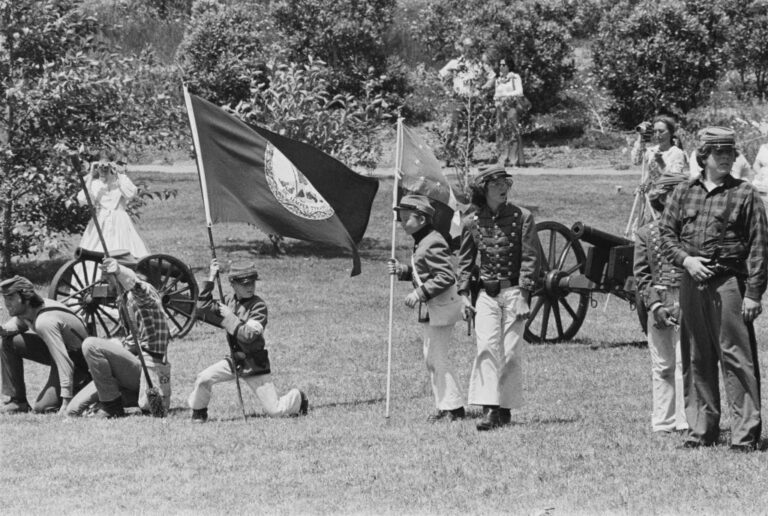
(Photo by Tony Korody/Sygma/Sygma via Getty Images)
There was a time when kids as young as eight or nine served this country in the battle. Some officially and with actual rank while others were tag-alongs. They participated in wars and skirmishes and lived lives that in today’s world would raise eyebrows at the very least – and worse, have parents in hot water. Some lied about their age. Others ran away from home. And some stayed home waiting for the call to do the bidding necessary, as men usually were on the front lines. But the common thread that called the youngsters was the innate desire to build a new country, protect it, and be a part of something much larger than themselves.
Older teens fought on the front lines, but younger boys and girls contributed as drummers, messengers, spies, and camp followers.
During the American Revolution and Civil War, boys and girls were called to the fighting fronts. Many enlisted as fifers and drummers but often times, were messengers and, as circumstances occurred, soldiers. The presence of non-combatants helped keep the troops calm by maintaining camp routines.
Getting the Band Back Together
Many kids performed as fifers, playing small flute-like instruments called fifes. Others played drums. Noncombatant musicians could enlist at age 12. During the American Revolution, children as young as ten joined in the fight for freedom – their small size and quiet movements often allowing them to pass undetected by British troops. On the home front, they assisted in producing gunpowder and running family farms when fathers and older brothers left to fight. But no one really kept records of how many kids were involved.
The Civil War was fueled by hundreds of thousands of kids, according to several military historians. It’s hard to quantify since most of these child combatants lied about their age to participate.
Several stories have emerged as some of these boys kept detailed diaries. Joseph Plumb Martin, at 15, enlisted in the Continental Army in the summer of 1776. He served for seven years and documented his experiences, including the winter at Valley Forge, in his published memoirs.
 And meet Richard Lord Jones: Records indicate he enlisted in the Third Connecticut Regiment as a fifer in June 1777 at the age of ten. And then in the Civil War there was the “Drummer Boy of Chickamauga,” John Clem, who ran away from home at age nine to join the Union Army and eventually became a high-ranking officer. He resigned his commission with the rank of major general.
William Black, a 12-year-old Union drummer boy, is frequently cited as one of the youngest soldiers wounded in action during the Civil War. And he kept drumming. Can you just imagine?
In more recent history, Jack Lucas famously lied about his age to join the Marines at age 14 and was awarded the Medal of Honor for his actions at Iwo Jima. And Cavlin Graham joined the Navy at age 12, becoming the youngest American to fight in World War II.
Hey Girl!
Betsy Dowdy, often called the Paul Revere of the South, was 16 years old when she overheard her father and another man discuss a serious matter in 1775. She listened and learned how a Crown supporter was burning farms and killing livestock. Betsy snuck out of the house, saddled her horse, crossed a river, rode through a swamp, and then rode over 50 miles to reach General William Skinner. Skinner quickly marshaled his men, and they marched two days to the Great Bridge. The patriots arrived first and made a quick mess of the British.
And did you know 15-year-old Dicey Langston, who eavesdropped on British loyalists and heard their plan to attack the Elder Settlement at Little Eden, South Carolina? Dicey crossed raging rivers and five miles of forest to tell her brother, who was with Elder, of the plan. Dicey made it home and the camp was spared.
A more famous teen girl was Sybil Ludington. Headstrong and determined, she rode her horse on that rainy night of April 26, 1777, to warn the local militia that British forces were attacking nearby Danbury, Connecticut. Her ride was longer than Paul Revere.
Susanna Bolling is known as the girl who saved the American Revolution. In short order, the lass outsmarted British General Charles Cornwallis, who had taken over the Bolling plantation. There were only girls and women left, and so he spoke freely of his plans to track down and capture one of George Washington’s closest and most trusted officers, General Lafayette. Susanna knew if Lafayette were captured, the battle for freedom would be lost. She left her home through an underground tunnel that led to the river. At the river she took a canoe and paddled across as quietly as she could. She reached the Continental Army General, and as such, Cornwallis was defeated.
Hey Kids, Don’t Forget Me When I’m Gone
The USA, as she celebrates 250 years of fighting for freedom, getting it wrong at times but mostly getting it right, is why we are all here. The chaos of war did not stop these very young guys or gals from joining in the fight for rights. These kids had principles and courage far above what can be understood by today’s standards. Let’s remember them, too, on Memorial Day and thank them for being ready for the ultimate sacrifice. And drop a coin if you live anywhere near their burial plots. Don’t forget them just because they are gone.

- Many kids have served in American conflicts and wars throughout the ages, from the Revolutionary War to World War II.
- The youngest American boy to fight in World War II was Calvin Graham, who lied about his age and joined the Navy at 12.
- Several teen girls acted as spies during the Revolutionary War and saved potentially thousands of American lives.