From the Founding to Today: The Winding Road of the Supreme Court
From basic human rights to the power of the states, the Supreme Court has shaped the US into what it is today.
By: Kirsten Brooker | January 15, 2026 | 1543 Words
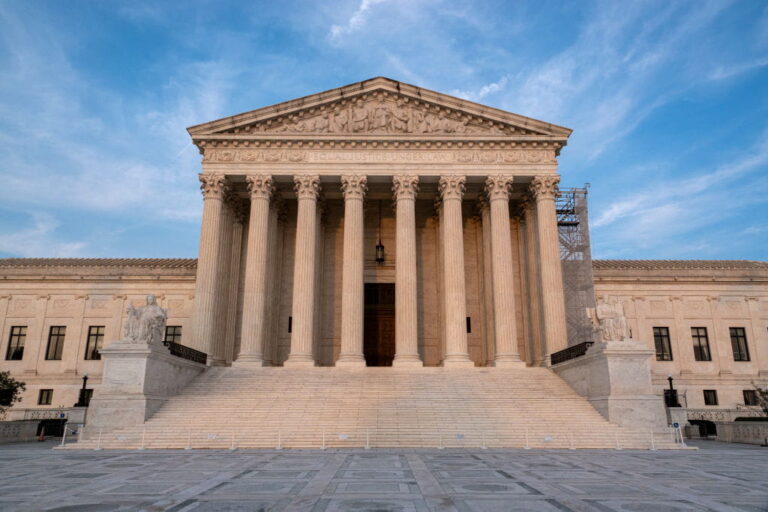
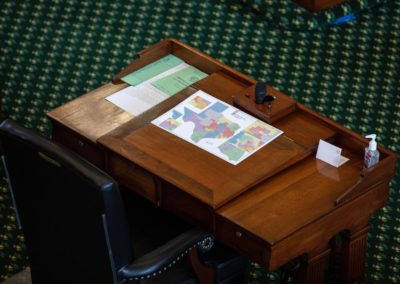
(Photo by Kevin Carter/Getty Images)
Congress comes up with and passes bills. The president signs those bills into laws. But what happens when one of those laws – or an action by the federal government or one of the states – might violate the Constitution? That’s where the judicial branch comes into play, especially the Supreme Court.
The federal judiciary includes numerous district and circuit courts, but the US Supreme Court is the highest court in the land. It was established by the Constitution and the Judiciary Act of 1789. The Court’s decisions over the years have influenced the boundaries of authority between the nation and the states, as well as the government and the citizenry.
The Start of the Supreme Court
Article III, section I of the Constitution states that the “judicial power of the United States shall be vested in one supreme Court, and in such inferior Courts as the Congress may from time to time ordain and establish.” Together, the Constitution and the Judiciary Act of 1789 are responsible for the official formation of the Supreme Court, the office of Chief Justice, and five justices (originally), as well as 13 district courts that are scattered around the country, and three circuit courts.
President George Washington signed the Judiciary Act on September 24, 1789, and nominated John Jay as the first Chief Justice and five other men as Jay’s five associate justices. Jay oversaw the first docketed case, Van Staphorst v. Maryland. The case was settled before any oral arguments took place. The case of West v. Barnes marks the first to be decided by the Supreme Court.
As the nation grew, both in area and population, so did the judicial system. Today, there are 94 district courts, 13 circuit courts, and a total of nine justices in the Supreme Court.
Landmark Cases
 Over the years, the highest court in the land has seen a few major changes. Alterations in the Court’s purpose, the makeup of the members, and changes in legislation following the different cases seen by the Court have been necessary over time.
Marshall Court (1801 – 1835)
Led by Chief Justice John Marshall, the “Marshall Court,” as it came to be called, saw many important cases. Marbury v. Madison in 1803 allowed the Court to establish the principle of judicial review (the Court’s right to review actions made by the legislative and executive branches of government and to ensure that they stay within the confines of the Constitution).
A few landmark cases seen by the Marshall Court have helped resolve some major issues along the way. Fletcher v. Peck (1810) helped the court to determine the importance and sacredness of signed contracts and their legal standing, while Dartmouth College v. Woodward (1819) helped settle the nature of public vs private charters. This led to the rise of the American business corporation and the country’s free enterprise system.
At that time, America and the federal government existed, but the states were still being established. In the 1819 case McCulloch v. Maryland, the Court was tasked with determining how much power the national government had in relation to the states. Maryland was attempting to collect taxes on a bank that was established by Congress. The Court found that Congress was allowed to create a national bank and that the states were not permitted to interfere with federal operations.
The Marshall Court also decided on a major case (Barron v. Baltimore) that determined the reach of the Bill of Rights. The Court decided that the Bill of Rights applies only to the federal government and not to the states.
Taney Court (1836 – 1864)
Slavery and tensions between the North and South were the main topics seen by the new Chief Justice, Roger B. Taney, and many of the Court’s decisions resulted in controversy. In the infamous case Dred Scott v. Sanford (1857), the Court decided that black people could not become legal citizens of the United States. Taney also held that the Missouri Compromise (legislation that prevented the expansion of slavery) was unconstitutional. Both were major decisions that potentially contributed to the start of the Civil War.
Reconstruction Era (1864 – 1910)
The Civil War lasted four years (1861 – 1865). President Lincoln was running the country, and the abolition of slavery within the states was his primary goal. The Court’s decisions over several cases during the late 19th century made it harder for free slaves to obtain protection from the government. Many cases in the post-Civil War era focused on the interpretation of the 14th Amendment and what it meant for black people living in the country.
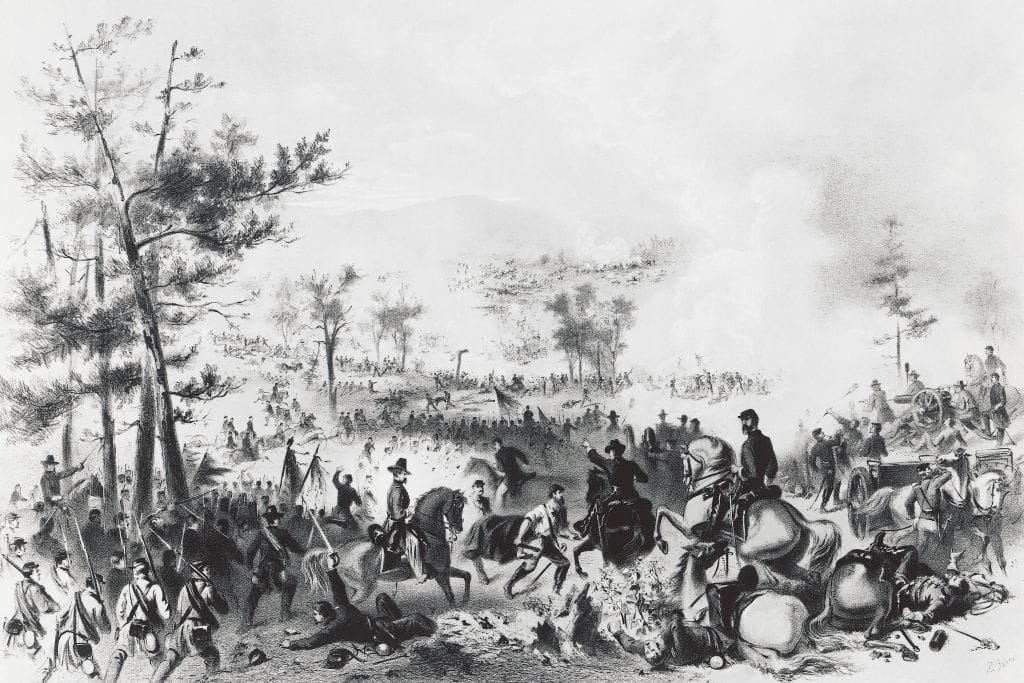
(Photo Credit Getty Images)
The Reconstruction Amendments (the 13th, 14th, and 15th Amendments) pursued protection for black Americans and their basic rights. Although there were many, the most prominent civil rights case was Plessy v. Ferguson (1896). The case surrounded racial segregation on railway cars and whether it was constitutional. The high Court found that the law was constitutional, leading the country to a decades-long “separate, but equal” ideology.
Between the years of 1864 and 1910, the Court saw three different Chief Justices: Salmon P. Chase, Morrison Waite, and Melville Fuller. In 1869, Congress found it necessary to increase the number of justices from five to eight.
A New Century (1910 – 1930)
During this period, the Court established that the 14th Amendment protected the “liberty of contract.” Many laws were overturned that were designed to protect employees. In the controversial case Lochner v. New York (1905) a New York baker was convicted of violating New York’s Bakeshop Act of 1895 that limited the number of working hours to ten hours per day or 60 hours per week. The Court found that the law violated the Due Process Clause and that the government need not interfere with a contract between an employer and his/her employees.
Another landmark ruling occurred in 1925 when the Supreme Court decided Gitlow v. New York. The Court incorporated the Due Process Clause of the First Amendment (the right to freedom of speech and freedom of the press) that protected socialist politician and journalist Benjamin Gitlow from further prosecution over his left-wing manifesto.
The Great Depression and the Years to Follow (1930 – 1953)
The 30s, 40s, and early 50s saw Chief Justices Charles Evans Hughes, Harlan F. Stone, and Frederick Moore Vinson. The Great Depression began in 1929 and lasted until 1939, and the Court was working to overturn many of the programs implemented by President Franklin D. Roosevelt that were meant to combat the Great Depression. One notable overturning was that of the National Industrial Recovery Act, a law that would authorize the president to regulate industry for fair wages and prices.
President Roosevelt was accused of “court-packing” by his opponents when he attempted to increase the size of the Supreme Court and appoint an additional justice for each member over the age of 70 years and six months. Under Roosevelt’s law, the maximum number of justices permitted at any one time would be capped at fifteen. Opposition to the law led it to ultimately fail in Congress.
Several cases in this timeframe overturned the convictions against black Americans in southern states and began the process of desegregating schools. As a result, significant increases in black voter registration and voting followed.
The Warren Court (1953 – 1969)
(Photo by Bettmann Archive/Getty Images)
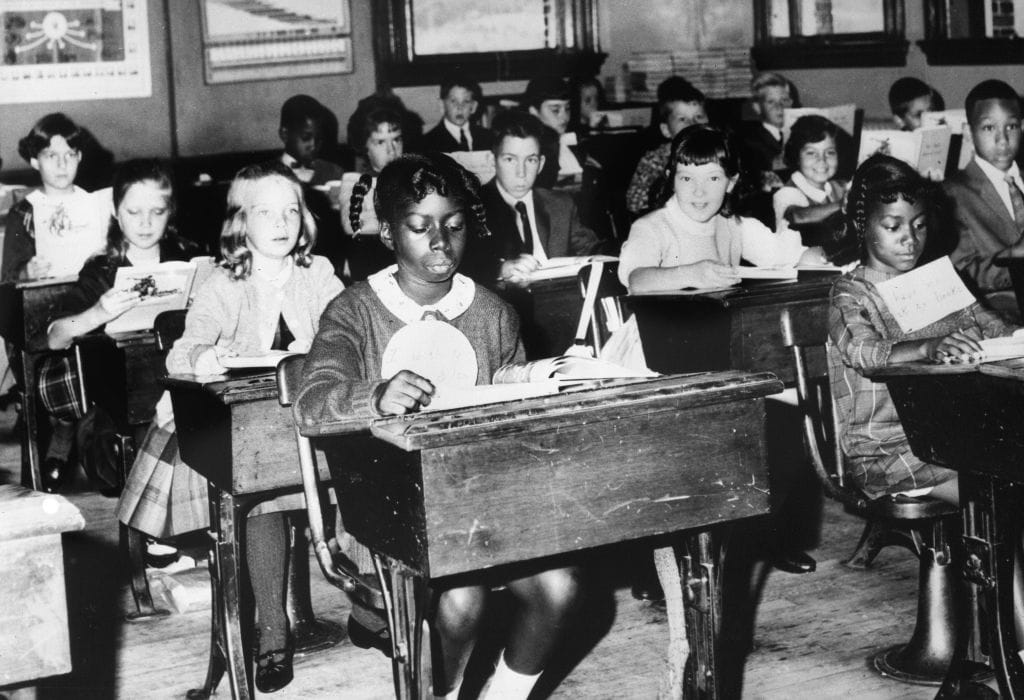
Chief Justice Earl Warren, who was appointed by President Dwight D. Eisenhower, headed the Supreme Court between 1953 and 1969. During this time, the Supreme Court made a long list of landmark decisions. One of those cases was Brown v. The Board of Education (1954), which deemed racial segregation within schools unconstitutional.
Another important case was Miranda v. Arizona (1966) in which the Court decided that law enforcement should be required to read a person’s rights before an interrogation can take place. This list, recited by police officers at the time of an arrest, is referred to as one’s Miranda rights.
Chief Justice Warren E. Burger (1969 – 1986)
During Warren Burger’s time serving as the Supreme Court’s Chief Justice, the famous case of Roe v. Wade (1973) took place. This case determined a woman’s right to have an abortion, and the Court found that a woman could (with certain restrictions) decide on the life or death of her unborn child without interference from the federal government and without violating the Constitution.
The Rehnquist and Roberts Courts (1986 – Present)
The last few decades have seen a plethora of cases regarding many topics like gun rights, gay marriage, affirmative action, burning of the US flag, immigration and the border, election recounts, and other important cases. Justices William Rehnquist and John G. Roberts (the Supreme Court’s current Chief Justice) and their eight constituents have made decisions on subjects labeled as “culture wars.” Political and social controversies remain at the forefront of the cases currently entering the Supreme Court.
The landmark cases and significant changes within the United States Supreme Court have shaped our government’s judiciary system. Through experience and consistent exposure to new ideas and ways of life, the highest court in the land, and those who work within it, gained a better understanding of what our forefathers were thinking when they drafted the US Constitution.

- The Supreme Court was established in 1789.
- The Supreme Court has seen many changes over the years.
- There were originally five justices and one Chief Justice assigned to the Court.