Archaeology – The Art and Science of Uncovering Hidden History
Digging up ancient treasures and truths.
By: James Fite | April 14, 2026 | 863 Words
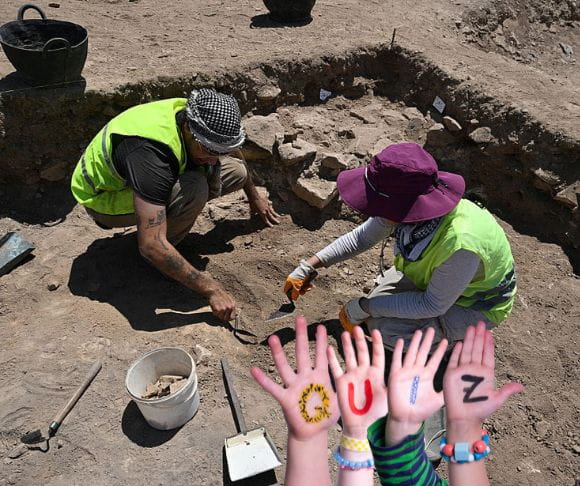
(Photo by Adsiz Gunebakan/Anadolu via Getty Images)
Unlike chemistry and astronomy, archaeology isn’t a physical science. It’s considered one of the humanities. In many ways, it’s more of an art, though it does require the use of techniques spanning multiple hard sciences. Archaeologists excavate (a fancy word for carefully dig) to uncover relics of the distant past, then they use chemistry and physics, among other scientific disciplines, to determine just what they are and how long they’ve been in the ground. Then, they interpret these findings in historical and social contexts to discover what the items were used for, why, and by whom. Archaeology is thus best described as a humanistic social science – bridging the gap between science and art.
What Archaeology Is – and Isn’t
If you’ve ever imagined someone brushing dirt off a skull at a dig in the desert or uncovering a lost temple deep in the jungle – whether you’ve seen the Indiana Jones movies or not – you’re not far from the truth. At its core, archaeology is the scientific study of past human life through material remains – that is, the things people from past civilizations left behind. These could be tools, buildings, pottery, bones, art, or even garbage.
The word archaeology comes from the Greek arkhaios, meaning “ancient,” and logos, meaning “study” – so, simply put, studying ancient stuff. But there’s a lot more to it than just digging in the ground with a shovel and a pick. Archaeologists use cutting-edge technology such as ground-penetrating radar, DNA analysis, and even satellite imaging.
Imagine once again that skull in the desert. Now imagine it’s the partial remains of a person who lived in the area 5,000 years ago. Much can be discovered from examining the physical remains on site, but archaeologists today can even use complex computer calculations to model what that person likely looked like back when he or she was alive.
If you’ve seen archaeologists on TV or in movies, it could be easy to assume they’re just well-educated treasure hunters. But in reality, they’re more like detectives. Every artifact is a clue. Every site is a long-lost story just waiting to be revealed. Of course, discovering long-buried treasures is still exciting. But archaeology isn’t just about what people had – it’s also about who those people were, how they lived, and what they believed.
From Curious Collectors to Serious Sleuths
Like the physical sciences referenced earlier, though, archaeology has a far less formal past. People have always been fascinated by what came before. Scholars of the Renaissance studied ruins of the ancient world, and, throughout history, those who had the resources to do so collected relics of the distant past.
 But it wasn’t until the 18th and 19th centuries that archaeology really began to look like the discipline we know today.
Before, people often dug for valuables – more concerned with how much wealth the treasures might bring them than what truths could be uncovered. Over time, though, methods and motivations improved. Archaeologists began to document where they found things, how deep they were buried, and with what they were found. This growing catalog of data eventually built a base of knowledge, and what was a treasure hunter’s hobby became more of a science. Today, archaeologists follow strict methods to protect the past even as they dig it up.
Big Discoveries That Changed the World
From the ancient ruins of long-gone civilizations to the abandoned malls of the last century, if humans left it behind, archaeologists study it. But some finds have been so significant that they changed the way we look at the world around us and our place in it. The Pyramids of Giza, for example, aren’t just impressive. They also reveal incredible engineering skills, complex social organization, and deep religious beliefs from thousands of years ago.
Paleontology – technically a separate discipline, as it studies non-human remains rather than what people left behind – is a related field using many of the same methods. Fossil discoveries in the 1800s led to changes in our understanding of Earth’s history. Suddenly the past wasn’t just human – there were dinosaurs long before!
Other discoveries, such as the Rosetta Stone, helped decode lost languages. Ancient cities such as Pompeii, frozen in time by volcanic ash, reveal a snapshot of what everyday life was like nearly 2,000 years ago.
Through archaeology, we continue to learn about our past in ways that affect us now and can even shape our future. And it’s a physical reminder that history is alive and ever changing, not just static words on a page in a textbook that never change. Perhaps most important of all, archaeology teaches us perspective – it reminds us that the world we live in today is just one chapter in a much longer story.

- Archaeology is the study of humanity’s past through examination of what people left behind.
- Archaeology is both a science and an art, pulling together various threads of physical and social science to reveal the whole truth.
- Archaeologists study ancient ruins and relics, but they also examine more recent items and events. Time keeps moving forward, and history keeps growing.