The Story of January – From the End of the Year to the Beginning
January is one of the newest months, and its place in the year was a controversial issue.
By: James Fite | January 1, 2026 | 639 Words

(Photo by: Ivy Close Images/Universal Images Group via Getty Images)
January marks the beginning of the new year – but that wasn’t always the case. The Gregorian calendar we follow today was inspired by an ancient Roman calendar that, according to legend, was designed by Romulus, the first king of Rome. His year began in March and ended in December, having just ten months over 304 days. The remaining days of what we now call a year were simply ignored!
So, how did January get its name, and what does it mean?
The First January
In ancient Rome, before it grew into a great empire and before even the rise of the Roman Republic, most government and military activity shut down for the coldest months of the winter. As such, they simply ignored this time and didn’t even formally name it! The Roman calendar began in March (Martius as it was called at the time) and ended in December, which simply means the tenth month.
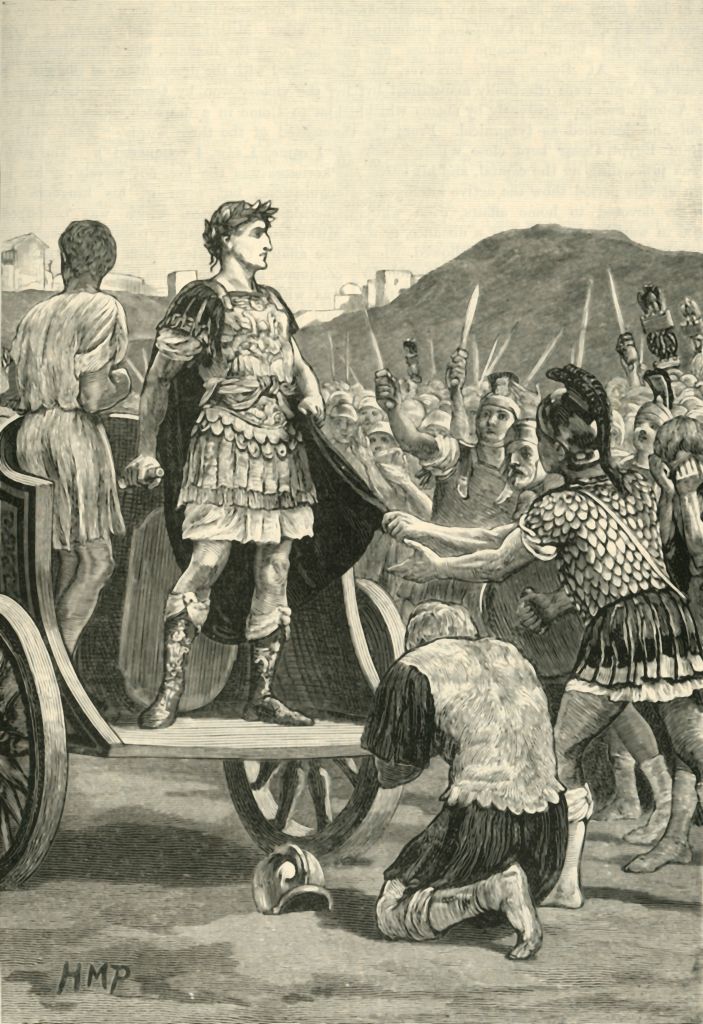
Julius Caesar (Photo by The Print Collector via Getty Images)
Romulus’ successor, Numa Pompilius, finally gave the “dead months” names sometime around 738 BC. Januarius was named for Janus, the Roman god of beginnings and transitions. Februarius was named for Februa, an ancient festival dedicated to ritual cleaning and washing. These two months were moved to the end of the year, giving Rome a lunar calendar of 12 months lasting 27 to 28 days each, and accounting for a 355-day year.
A later king of Rome, Tarquinius Priscus, moved Januarius and Februarius to the beginning of the year ahead of March, but that change didn’t survive his reign. It wasn’t until around the first century BC that the Roman Senate decided to move the months we now call January and February to the beginning of the year and to set New Year’s Day and the election of the consuls to Jan. 1.
Shortly after this, Julius Caesar came to power, and he reinvented the calendar entirely. What came to be known as the Julian calendar had 12 months, January through December, based on Earth’s revolution around the sun. This change stuck through the Gregorian calendar, and January has been with us ever since.
Roman Religious Roots
Janus was the Roman god of beginnings, gates, transitions, time, duality, doorways, passages, and endings. He was usually shown as a two-headed man, with one face pointing forward and the other backward.
According to the Encyclopedia Britannica, Janus worship went all the way back to the days of Romulus, perhaps even before the founding of the city of Rome itself. When Rome was built, it included numerous jani, or ceremonial gateways. These were usually freestanding structures used as symbolic entrances or exits. Eventually, these jani gained a superstitious attachment to the Roman army, and there were lucky and unlucky ways for an army to march through one on its way out to war. The most famous was Janus Geminus, which was also a shrine to Janus. According to Roman historian Livy, those gates were only closed twice in the roughly 700 years between the rule of King Numa Pompilius and Emperor Augustus.
Janus came to be regarded as the Roman god of all beginnings, including the start of the day, week, month, and year. Perhaps this was what led Tarquinius Priscus, the Roman Senate, and Julius Caesar to change ancient traditions and official records to bring January to the beginning of the year rather than the end.

- In 738 BC, the month of Januarius, the Latin name of January, was named for Janus, the Roman god of beginnings, gates, transitions, time, duality, doorways, passages, and endings.
- He was usually depicted as a two-headed man, with one face pointing forward and the other backward.
- Janus worship went all the way back to the days of Romulus, perhaps even before the founding of the city of Rome itself.