What Is Advent?
Christmas is right around the corner, but Advent has already begun.
By: Elizabeth Lawrence | December 10, 2025 | 579 Words
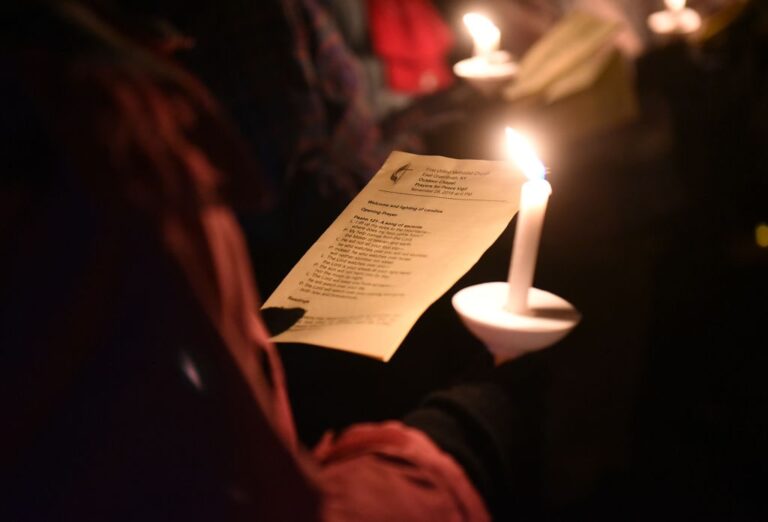
(Photo by Lori Van Buren/Albany Times Union via Getty Images)
The holidays are here, and with them comes one of the most important seasons in Christianity: Advent. While much of the world rushes to wrap presents, find the perfect Christmas tree, and organize holiday dinners, Christians are encouraged to enter a quieter period of anticipation and reflection.
A Coming, an Approach
Advent is a four-week period on the Christian liturgical calendar, during which the faithful joyfully wait to celebrate the birth of Jesus Christ on Dec. 25. The season begins every year on the Sunday closest to Nov. 30.
“Advent” is derived from the Latin word “adventus,” meaning “a coming, approach, arrival.” Father Mike Schmitz, a Catholic priest, along with Ascension Press, a Catholic media organization, explained that while Advent “can often feel like a countdown to Christmas and a hustle of preparation for the holidays,” it is much more than that.
“Much of life is spent waiting, and it can be hard. Waiting can feel like time wasted when we don’t engage it with intention, drifting instead into worry, numbness, or grasping. How we wait shapes who we become. The call of the Christian is to trust that every moment matters, and that God is working here and now even through periods of waiting,” Ascension’s website featuring Schmitz states.
“Waiting well means that we are active participants in this moment, despite the uncertainties ahead. This Advent, waiting can be engaged preparation, a beautiful opportunity to let Jesus into every part of our lives,” it continues.
Advent Themes
Each week during Advent, beginning on Sunday, has a theme: hope, peace, joy, and love.
The first week of Advent is about hope and is meant to serve as a reminder of Isaiah’s biblical prophecy on the birth of Jesus: “Behold, the virgin shall conceive and bear a son and shall call his name Immanuel.”
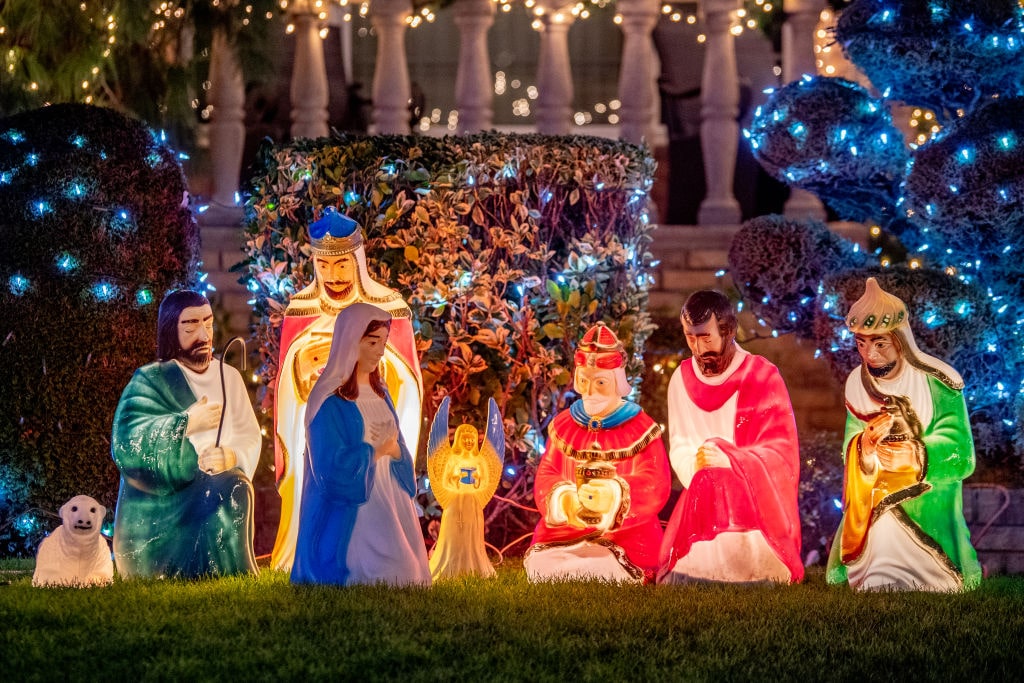
(Photo by Roy Rochlin/Getty Images)
The second week’s theme is peace, recognizing the journey that Jesus’ earthly parents, Mary and Joseph, took from Nazareth to Bethlehem. Christians are called to reflect on the division and destruction in the Old Testament ahead of the birth of Christ, which brought about the Kingdom of Peace.
The theme of the third week is joy, highlighting the “joyful anticipation of the shepherds who journeyed to see Jesus in Bethlehem, even before the wise men.”
The final week’s theme is love, specifically the love that God offers all people through the gift of His son, Jesus Christ.
The Advent Wreath
Many Christians track the season’s progress with an Advent wreath, a centuries-old tradition featuring a circular arrangement of evergreen branches, three purple candles, and one pink candle. They are lit every Sunday during Advent in recognition of each week’s theme.
According to Hallow, a wildly popular Christian prayer app, the wreath’s circular shape symbolizes “God’s infinite love for us – it is never-ending, just like the true Light of the World, Jesus, who leads us into eternal life with Him.”
The evergreen leaves that make up the Advent wreath are meant to encourage Christians to “reflect on the everlasting nature of God.”
The next time you meet a Christian this season, feel free to wish them a “blessed Advent.”

- Advent is a four-week period on the Christian liturgical calendar leading up to Christmas.
- Each week in Advent has its own theme: hope, peace, joy, and love.
- Some Christians track the season’s themes with an Advent wreath.