The History and Purpose of ICE
Immigration and Customs Enforcement helps keep US borders secure.
By: Elizabeth Lawrence | January 20, 2026 | 546 Words
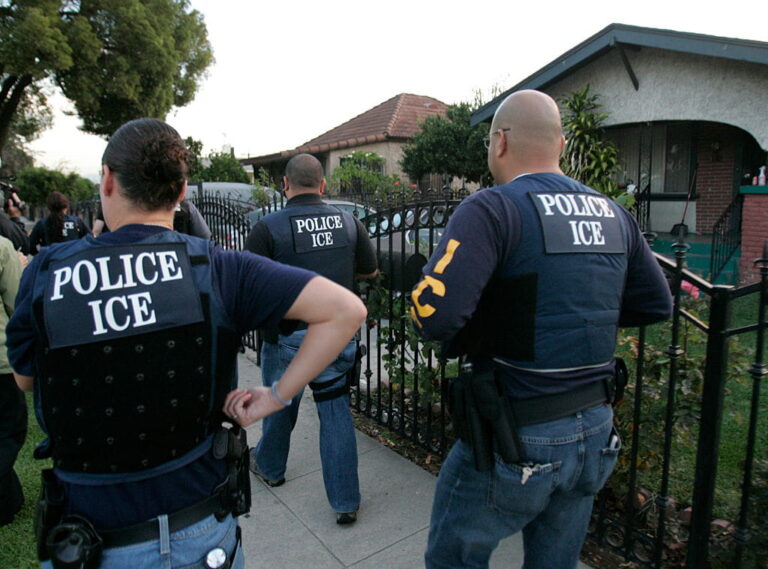
(Photo by Allen J. Schaben/Los Angeles Times via Getty Images)
In the wake of the September 11, 2001, terrorist attacks, the United States was at a crossroads. The delicate balance between liberty and safety was suddenly strained, forcing lawmakers to confront difficult questions about how best to protect the nation without abandoning its core principles.
Ultimately, Congress passed the Homeland Security Act, and in March 2003, the Bureau of Immigration and Customs Enforcement – now US Immigration and Customs Enforcement (ICE) – opened its doors under the newly established Department of Homeland Security (DHS).
ICE: A History
DHS took control of nearly two dozen federal agencies and programs, including the US Customs Service and the Immigration and Naturalization Service, which were divided up and turned into three new agencies: the Bureau of Customs and Border Protection, the Bureau of Citizenship and Immigration Services, and the Bureau of Immigration and Customs Enforcement.
On March 11, 2003, President George W. Bush appointed Michael J. Garcia as the first assistant secretary – the top leadership position – at the Bureau of Immigration and Customs Enforcement.
Under Garcia’s leadership, the first eight Fugitive Operations Teams arrested 1,900 “unlawfully present noncitizens,” according to ICE. Authorities also apprehended “five of the agency’s most wanted noncitizens in less than a month” and secured the removal of a Cuban spy.

(Photo by Jacek Boczarski/Anadolu via Getty Images)
In 2007, the Bureau of Immigration and Customs Enforcement was renamed US Immigration and Customs Enforcement (ICE). The following year, ICE opened a new headquarters in Southwest Washington, DC, giving “the growing agency the space and resources it needs to fulfill its expanding mission.”
On the DHS’s tenth anniversary in 2013, President Barack Obama acknowledged ICE and all other DHS components, urging Americans “to recognize the department for improving the nation’s readiness and resilience.”
Over the next dozen years, ICE arrested hundreds of thousands of criminals, including child predators, gang members, scammers, international fugitives, and human traffickers.
ICE’s Purpose
When ICE was established, Congress granted the agency “a unique combination of civil and criminal authorities to better protect national security and public safety” after the deadly September 11 terrorist attacks.
According to the agency’s website, the primary mission of ICE is to “promote homeland security and public safety through the criminal and civil enforcement of federal laws governing border control, customs, trade and immigration.”
US Immigration and Customs Enforcement has over 20,000 law enforcement officers and support staff across more than 400 offices around the world. ICE’s annual budget is roughly $8 billion, with operations largely coming from three internal offices: Homeland Security Investigations (HSI), Enforcement and Removal Operations (ERO) and Office of the Principal Legal Advisor (OPLA).
This year, ICE is helping execute President Donald Trump’s order to deport the millions of illegal immigrants let into the United States during President Joe Biden’s single term in office. In doing so, ICE is enforcing immigration laws that were often ignored under the previous administration.

- ICE was created under the Homeland Security Act, which was passed after the 9/11 terrorist attacks.
- President George W. Bush appointed Michael J. Garcia as the first assistant secretary of ICE, which was called the Bureau of Immigration and Customs Enforcement at the time.
- ICE’s mission is to maintain public safety by enforcing federal laws governing border control, customs, trade and immigration.