The First Americans and the Kelp Highway Theory
Researchers believe 13,000-year-old remains hold a history-changing secret.
By: Elizabeth Lawrence | July 20, 2026 | 560 Words
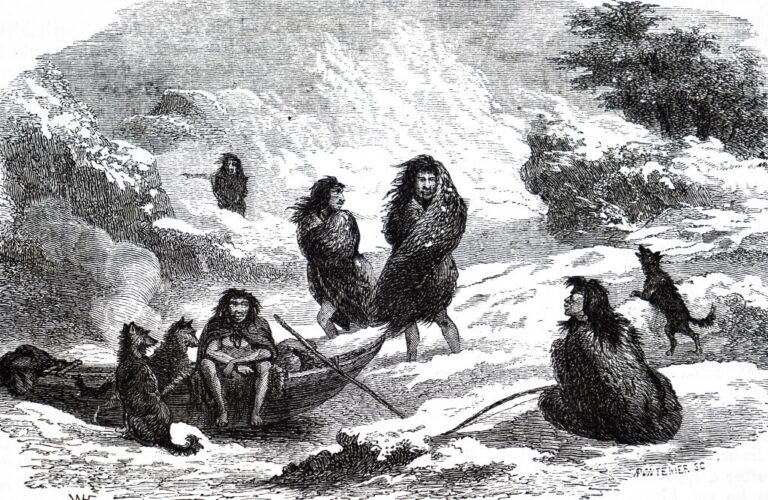
(Photo by: Universal History Archive / Universal Images Group via Getty Images)
The US recently celebrated the 250th anniversary of the Declaration of Independence, recognizing two and a half centuries since the Founding Fathers formally broke ties with Great Britain and King George III. But long before the United States was even an idea, the first Americans were migrating to North America – and new evidence suggests scientists may have been wrong all along about how they got here.
The First Americans
Researchers believe the key to understanding where the first Americans came from – and how they arrived on the continent – lies with the oldest human remains ever found in North America, which were discovered by archeologist Phil Orr in 1959. He found the human remains – eventually referred to as the “Arlington Springs Man” – on Santa Rosa Island in California. Orr had begun his research in the Channel Islands off the coast of Southern California nearly ten years before his world-history-changing discovery.
Due to technological limitations, Orr was unable to accurately date the remains and improperly estimated they were 10,000 years old. Decades after the discovery, geologist Thomas Stafford used radiocarbon dating to establish that the corpse was actually around 13,000 years old. The true age of the remains gave rise to a new theory about how the first Americans arrived in North America: the Kelp Highway Theory.
The Kelp Highway Theory
For years, scientists and researchers have cautiously agreed that the first Americans arrived in the Americas by walking across the 600-mile Bering Land Bridge, which is believed to have connected modern-day Siberia with Alaska during the last Ice Age. “But genetic evidence shows there is no direct ancestral link between the people of ancient East Asia and modern Native Americans,” Scientific American noted, adding that “there is no evidence they had reached Alaska or the rest of the New World either.”
 Obviously, the Bering Land Bridge theory has faced skepticism – and the discovery of the Arlington Springs Man suggests the doubters may have been onto something. Rather than traveling to the Americas by land, some researchers now believe they may have come by boat, following a “kelp highway” along the coast to avoid glaciers.
“All the way from Japan to Baja California, there are kelp forest ecosystems that have very similar suites of animals,” said Dr. John Johnson, curator of anthropology at the Santa Barbara Museum of Natural History, according to the Daily Mail. “This connects with the whole idea of a coastal migration, an ancient coastal migration where people would have been using watercraft and going around glaciers when they encountered them and working their way down until they came to California.”
Questions Remain
Not all archeologists are on board with the Kelp Highway Theory. Many still argue that the Clovis people, an inland culture, were the first to inhabit the Americas and traveled there on foot, despite the offshore discovery of the Arlington Springs Man.
While the debate over the first Americans’ migration route continues, there is no doubt the Arlington Springs Man has sparked new ideas about how the continent’s earliest inhabitants arrived.

- The oldest human remains ever discovered in North America are referred to as the Arlington Springs Man.
- The Arlington Springs Man was found in the Channel Islands off the coast of California.
- Researchers now believe the first Americans may have traveled to the continent by boat rather than across a land bridge during the last Ice Age.