Tariff Policy in the Age of America
Even George Washington thought tariffs were a good idea.
By: Andrew Moran | January 7, 2026 | 885 Words
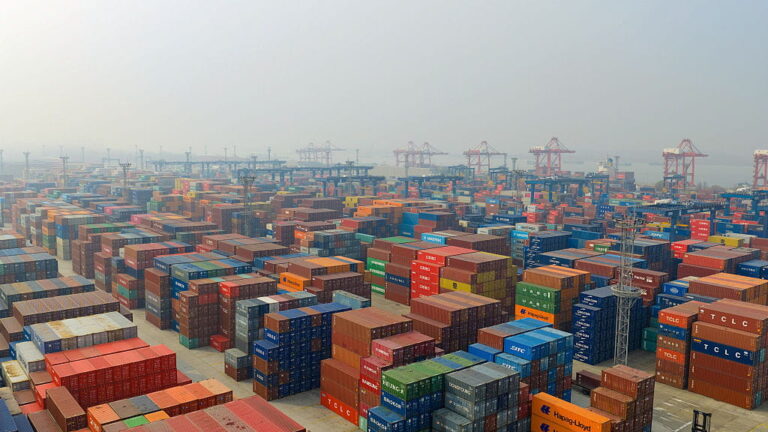
(Photo credit should read CFOTO/Future Publishing via Getty Images)
President Donald Trump has not been the only US leader in history to use tariffs. Since America’s independence 250 years ago, the United States has relied on tariff policy to pursue a variety of objectives, whether raising revenue to fund government operations or protecting domestic industry.
What Are Tariffs?
A tariff is a tax on foreign goods and services entering the United States. Businesses that purchase products from abroad pay tariffs, income that is then transferred to the federal government.
For example, if the Florida-based Acme International buys candy from a business in the United Kingdom, Acme International would pay the import tax. The UK government is not paying the tariff.
Tariffs could push US companies to consider domestic substitutes. If this happens, foreign exporters may cushion the financial blow of levies and maintain a competitive edge by lowering their costs.
Governments use tariff policy for various reasons, including generating revenues, shielding an industry from foreign competition, reducing trade deficits, and bringing a specific sector back home – also known as reshoring.
How has America used tariffs in the past? Here is a list of the most significant tariff endeavors in US history.
Tariff Act of 1789
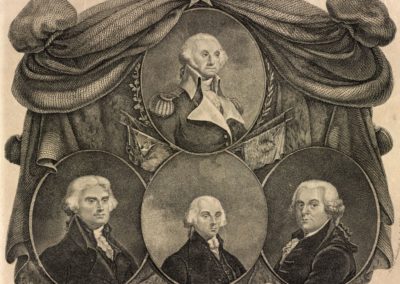
One of the first national tariff laws passed by Congress was the Tariff Act of 1789, signed by President George Washington on the Fourth of July.
 It implemented a 5% tax on imports to fund the government, protect American industries, and pay off war debts. In addition to import duties, the law imposed tonnage fees: 50 cents per ton on goods carried by foreign ships, 30 cents per ton on US-built ships owned by foreign companies, and six cents per ton on vessels owned by Americans.
This legislation was designed to be the primary source of federal revenue and to preserve US manufacturing.
The Tariff of 1828
The Tariff of 1828, also known as the Tariff of Abominations, increased duties on imported goods to protect northern and western industries from imports. The bill established a 38% tariff on a broad range of imported goods and a 45% tax on specific imported raw materials, including cotton, iron, molasses, and wool.
US officials sought to raise the cost of imported goods, allowing northern manufacturers to produce and sell their products at lower prices.
But while the tariff policy benefited the North, it enraged the South, sparking what historians call the Nullification Crisis: the idea that a state could declare federal laws invalid within its borders.
Gilded Age Tariffs
Known as the Gilded Age Tariffs, the federal government implemented far-reaching, high protective tariffs from 1861 to 1913. The late 19th-century tariff policy shaped America’s industrial structure heading into the 20th century.
Most notably, in 1890, President William McKinley signed expansive tariff legislation that increased the average duty on imports to nearly 50%. The goal was to protect US workers, but it raised consumer prices and triggered trade retaliation, prompting an electoral headache for the Republican Party.
McKinley became known as the “tariff king.”
Smoot-Hawley Tariff of 1930
Economists credit the Smoot-Hawley Tariff Act of 1930 as one of the main contributing factors that prolonged the Great Depression.
Sponsored by Sen. Reed Smoot (R-UT) and Rep. Willis Hawley (R-OR) and signed into law by President Herbert Hoover, the bill substantially raised import duties on more than 20,000 goods.
The legislation aimed to protect American industries and farmers during the economic downturn. Instead, it sparked a trade war as countries retaliated with tariffs of their own. Additionally, the Smoot-Hawley Tariff policy halted international trade and worsened US economic conditions.
Post-War Tariff Policy
Following World War II, the United States embraced multilateral trade liberalization, drastically lowering average US tariff rates to around 5%.
 The General Agreement on Tariffs and Trade (GATT), established in 1948, was a landmark legal agreement that bolstered the post-war economic recovery both at home and in Europe.
The agreement advanced fair trade, removed quotas, reduced trade barriers, lowered tariffs, and became a precursor to the World Trade Organization.
Tariffs in the 21st Century
While the United States had already abandoned an expansive tariff policy as the world transitioned into the 21st century, Republican and Democratic administrations continued to use targeted levies to protect domestic industries.
For instance, President George W. Bush imposed tariffs on foreign steel imports in 2002, ranging from 8% to 30%. As another example, President Barack Obama slapped a 35% levy on tires entering the US market in 2009.
However, at the start of President Donald Trump’s second term, the United States crafted an aggressive trade stance to rebalance international trade. The White House introduced sectoral and reciprocal tariffs on all US trading partners, with the core objective to bring manufacturing back to the world’s largest economy.
Economics and National Security
Has Trump made tariffs great again? The administration thinks it has, citing low inflation, trillions of dollars in new investment, and trade agreements that eliminate tariffs on US goods and dismantle non-monetary trade barriers. As the United States celebrates 250 years of independence, President Trump desires to make America less dependent on the world for the stuff it consumes.

- A tariff is a tax on foreign goods and services entering the United States.
- The United States has relied on tariff policy to pursue a variety of objectives, whether raising revenue to fund government operations or protecting domestic industry.
- One of the first passed by Congress was the Tariff Act of 1789, signed by President George Washington, which implemented a 5% tax on imports.