Sarah Polk – A Very Religious First Lady
Religion before politics was the first lady’s belief.
By: Kelli Ballard | December 30, 2025 | 828 Words
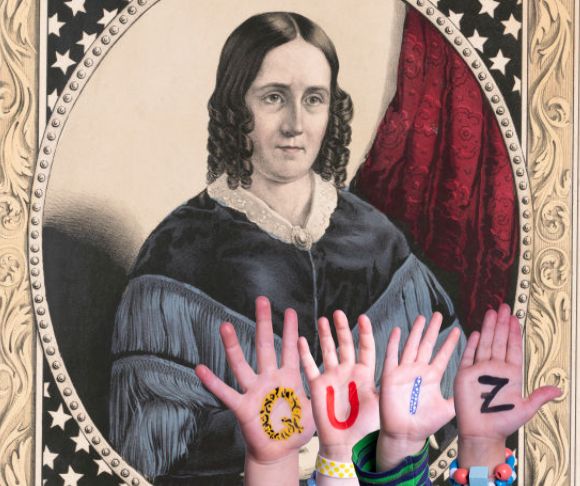
Sarah Polk (Photo by: GHI Vintage/Universal History Archive/Universal Images Group via Getty Images)
When people think of first ladies, they often picture fancy dresses, state dinners, and polite smiles, but Sarah Polk was something very different. Living in a time when women were expected to stay quiet about politics, she became one of the most involved presidential spouses in American history. Smart, organized, deeply opinionated, and intensely serious about her role, she helped shape how the White House functioned during a fast-moving and controversial period of US history. Her story shows that influence does not always come with a title or a vote, and that some of the most important political work happens behind the scenes.
Early Life
Sarah Childress Polk was born Sarah Whitsett Childress on September 4, 1803, near Murfreesboro, Tennessee, into a wealthy and politically connected family. Her father, Joel Childress, was a wealthy planter and merchant. At a time when most girls were taught only basic reading and household skills, Sarah received an unusually strong education. She attended Salem Academy in North Carolina, a Moravian school known for offering advanced instruction to young women. There she studied geography, literature, mathematics, and religion, subjects that were rarely considered necessary for women in the early nineteenth century.
From a young age, Sarah followed political events closely. She developed an early interest in state and national politics and paid attention to public debates that many women of her era were discouraged from even discussing. Later in life, she openly acknowledged that she did not fit traditional expectations, stating that she would “neither keep house, nor make butter,” but would “always take a deep interest in State and national affairs.” That quote, preserved by the Miller Center, captures how she viewed her role long before she ever entered the White House.
First Lady Sarah Polk
Sarah married James K. Polk on January 1, 1824. Their marriage produced no children, which allowed Sarah to devote herself almost entirely to her husband’s political career. As Polk rose through public office, serving in Congress, becoming Speaker of the House, and later governor of Tennessee, Sarah acted as his closest assistant. She managed correspondence, tracked political developments, and helped organize his campaigns. The Miller Center describes her as his “unpaid political partner,” emphasizing that her involvement went far beyond social support.
 When Polk became the 11th president in 1845, Sarah entered the White House fully prepared for public life. As first lady, she quickly established a reputation for seriousness and control. She believed strongly that the executive mansion should reflect moral discipline. According to the White House Historical Association, Sarah banned dancing, card playing, and alcohol at official events and refused to attend the theater or racetrack. The Polks also strictly observed the Sabbath, limiting Sunday business and social calls, a decision that frustrated many political figures but reflected her religious convictions.
Despite these restrictions, Sarah Polk was deeply involved in the daily workings of the presidency. President Polk publicly acknowledged her importance, stating, “None but Sarah knew so intimately my private affairs.” That quote shows how completely he trusted her judgment and discretion during one of the most demanding presidencies of the nineteenth century.
Sarah was also very good at keeping information organized. Records from the Library of Congress show that she could quickly find letters, books, and papers her husband needed. Newspaper editor Jeremiah George Harris remembered that she “knew where every authority was that he might want to refer to … and could lay her hand on what he wanted and forward it to him.” At a time when there were no computers, emails, or digital files, this kind of organization was extremely important for helping the president do his job well.
Her influence extended to the physical space of the White House as well. The White House Historical Association notes that during her tenure, the Red Room was decorated in red for the first time, and gas lighting was installed, marking a modernization of the executive mansion. She hosted weekly receptions that allowed politicians and diplomats access to the president while maintaining strict order and decorum.
After leaving the White House in 1849, Sarah’s life changed abruptly. James Polk died only three months after the end of his presidency. At 45, Sarah became a widow and never remarried. She spent the next four decades preserving her husband’s papers and protecting his reputation. During the Civil War, she remained in Nashville, and her home was treated as neutral territory by both Union and Confederate leaders, reflecting the respect she commanded across political lines.
Sarah Polk died in 1891 at the age of 87. Her life challenges the idea that early first ladies were merely decorative figures. She was educated, politically engaged, and influential, even while operating within the strict limits placed on women in the nineteenth century.

- Sarah Polk was educated beyond what most ladies of her time were.
- Sarah was very influential as first lady and often helped her husband, James Polk.
- Sarah Polk was very religious, and she and her husband refused to conduct business on Sunday.