Mary Jane Richards and Civil War Espionage
The Civil War, the deadliest conflict in American history, was a battle between the North and the South over the issue of slavery.
By: Elizabeth Lawrence | April 8, 2026 | 607 Words
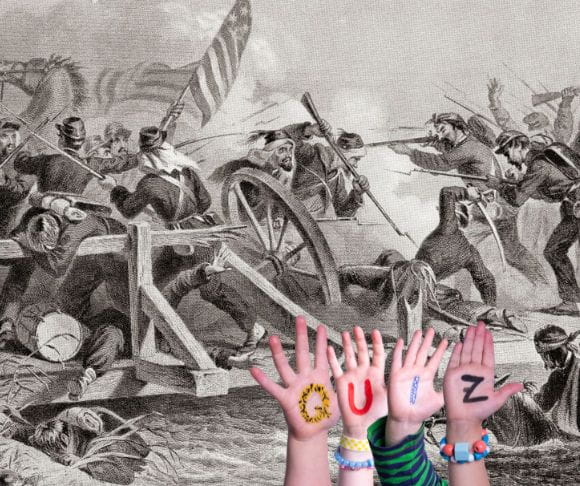
Photo by: Universal History Archive/Universal Images Group via Getty Images)
The Civil War, the deadliest conflict in American history, was a battle between the North and the South over the issue of slavery. It was not only fought on bloody battlefields but also in the shadows, where spies risked their lives to help both sides of the war. One such spy was Mary Jane Richards.
A Civil War Spy
The story of Mary Jane Richards was first told in 1911, half a century after the beginning of the Civil War. At the time, Harper’s Magazine interviewed Annie Van Lew Hall, who claimed to have known a black woman named “Mary Elizabeth Bowser” who served as a spy during the conflict. Bowser, she said, had worked in Confederate President Jefferson Davis’ home, where she worked a clandestine mission to gather information for the Union.
While the story “became the stuff of Civil War legend as it was repeated and embellished over the next century,” according to the National Park Service, much of Hall’s story turned out to be true – but she got the spy’s name wrong.
Annie Van Lew Hall’s aunt, Elizabeth Van Lew, was the leader of a spy operation in the Confederate capital of Richmond, Virginia. Among those working for Van Lew was an African American woman named Mary, later identified as Mary Jane Richards.
The Van Lew family and Richards detested the Confederacy, providing care to northern troops who were wounded in battles fought near their home. At the same time, Elizabeth Van Lew “established contact with the U.S. government” and started providing “military intelligence to army leaders and assisting in the escape of prisoners of war from Richmond.”
 Multiple slaves and free African Americans contributed to the espionage operation, including Mary Jane Richards. After the war, Richards recalled her experiences as a spy in multiple public speeches. According to the Anglo African, Richards said “she went into President Davis’s house while he was absent, seeking for washing, and while there was conducted into a private office by one of the clerks, when she opened the drawers of a cabinet and scrutinized the papers. While thus employed Jeff came in and inquired of her what she was doing there, but considering she was colored allowed her to go in peace.”
While there is no official record of Richards’ birth, researchers believe she was born around 1840 in Virginia. It is also unclear who her parents were; Richards provided contradictory explanations about her mother’s identity through the years, including that her mother was a slave, that she didn’t know who her mother was, and that her mother was white. Richards made similarly confusing statements about her father, who she said was unknown and also “a mixture of Cuban-Spaniard and negro.”
St. John’s Episcopal Church in Richmond, Virginia, has the first “probable” record of Richards, which states that “a colored child belonging to Mrs. [Eliza] Van Lew” called “Mary Jane” was baptized on May 17, 1846. Years later, the Van Lew family sent Richards to New Jersey for a formal education, but she eventually returned to Virginia.
While Annie Van Lew Hall’s 20th-century recollection of a Civil War spy named “Mary Elizabeth Bowser” wasn’t quite right, researchers agree Hall was likely referring to Mary Jane Richards, whose clandestine contributions helped the Union win the Civil War.

- Mary Jane Richards was a black woman who operated as a spy during the Civil War.
- An early 20th-century account of Richards’ role as a spy incorrectly referred to her as Mary Elizabeth Bowser.
- While working as a spy, Richards snuck into the home of Jefferson Davis, who served as president of the Confederacy.