Long-Term Interest Rates Highest Since Global Financial Crisis
The bond market is sending some signals.
By: Andrew Moran | May 26, 2026 | 514 Words
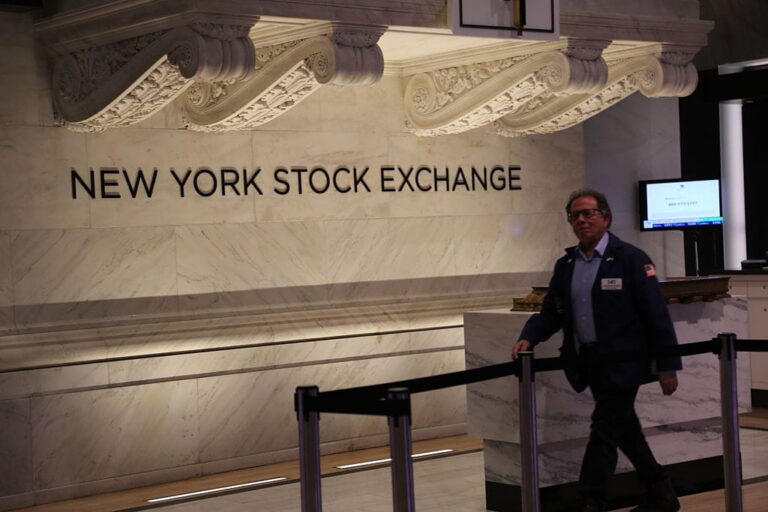
(Photo by Liu Yanan/Xinhua via Getty Images)
It has been an exciting time in the government bond market. The United States, the United Kingdom, Japan, and Europe have seen long-term interest rates accelerate since the start of the war in Iran. This is important because investors look to the bond market for signals about the economy, whether for inflation expectations or economic growth. What are bonds telling us?
From Iran to Interest Rates
First, what are government bonds? This is an investment in which the government borrows from the public for an extended period (ranging from 30 days to 30 years) in exchange for interest. Second, what is the interest? The number investors focus on is the yield, which is the expected return they will receive when the bond matures.
For nearly three months, the US Treasury market has been experiencing tremendous volatility: Bond prices have fallen sharply, and yields have risen notably.
This week, for the first time since the Global Financial Crisis almost 20 years ago, the 30-year Treasury yield topped 5.19%. The ten-year yield, which is the main benchmark for consumer and government borrowing, firmed above 4.6%.
Rising bond yields are sending various messages to global financial markets.
The main risk right now is sticky inflation, meaning that prices could remain high for longer. The US consumer annual inflation rate reached 3.8% in April, and economists expect it to top 4% in May. The primary fear is that underlying inflation – beyond food and energy – will linger in the economy.
At the same time, elevated inflation is leading traders to expect the Federal Reserve to keep interest rates higher for longer and even to follow through on a rate hike later this year.
 The US central bank manages the benchmark short-term federal funds rate. This is a key policy rate that influences borrowing costs for businesses and consumers. It can also impact the ten-year Treasury yield.
Prior to the war, the Fed was expected to lower the policy rate from its current target range of 3.5% to 3.75%. Now, investors are pricing in the institution to pull the trigger on a 25-basis-point hike to a new target range of 3.75% to 4%.
The two-year yield, which tracks Fed policy expectations, has been trading above 4%.
Another part of the puzzle is on the fiscal side. While the United States had already been wrestling with high debt and budget deficits, higher interest rates will worsen the current situation. This is because the US government services its national debt by issuing bonds to domestic and foreign investors and paying interest on existing and new Treasury securities.
Trouble for Uncle Sam
Washington is drowning in red ink. The national debt recently topped $39 trillion, climbing by about $5 billion a day since October. By this rate, the debt will reach $40 trillion by the year’s end. The longer interest rates stay high, the more taxpayers will be on the hook for interest payments.
Consider this: Interest is the second- or third-largest budget item, higher than national defense.

- Treasury bond interest is higher than it has been for nearly 20 years.
- Interest on debt is the second- or third-largest largest budget item.
- The national debt is over $39 trillion.