Killer Whales – The Largest Members of the Dolphin Family
These apex predators can be found in oceans worldwide.
By: Kirsten Brooker | July 9, 2026 | 870 Words
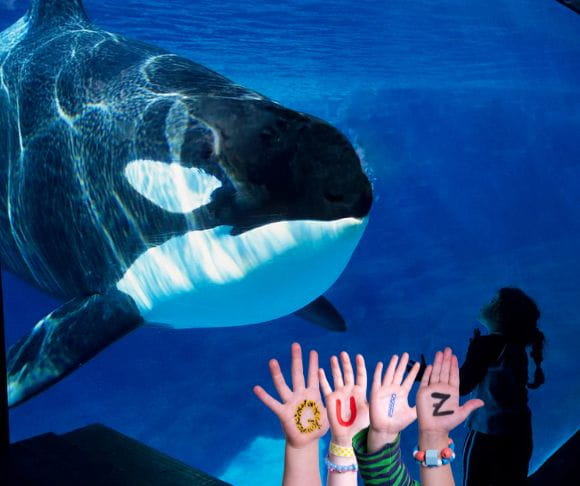
(Photo by Wolfgang Kaehler/LightRocket via Getty Images)
Killer whales have been a featured attraction for many decades at SeaWorld parks across the United States. As of 2023, the powerful marine mammals are no longer used as a source of entertainment for park guests. There are currently 19 orcas (another name for killer whale) still in captivity at SeaWorld parks, and they are the last generation, as the organization has stopped breeding the captive animals. After several devastating mishaps that took the lives of humans, the animals are now used only for educational purposes rather than for performance.
Powerful Apex Predators With an Affinity for Family
As a member of the dolphin family, the orca might not be considered a dominating and powerful predator. Yet as the killer whale name indicates, these mammals are a force to be reckoned with. Some believe “killer whale” is a mistranslation of “whale killer,” the name early Spanish sailors assigned to the massive creatures they witnessed hunting large whale species.
Orcas are dimorphic, meaning the males are larger than the females. The average male killer whale can weigh more than 6 tons and range from 20 to 26 feet in length. Females are still impressively large, weighing around 4 tons and are about 16 to 23 feet in length. A male’s pectoral fin and dorsal fins are larger than those of a female, with noticeable differences in the width of their tailstock and pectoral flippers.
 The marine mammals are easy to identify due to their distinct pigmentation. They are nearly entirely black with white and gray patches in different places on their bodies. The dorsal fin and saddle patches are unique to individual orcas, much like human fingerprints, which help scientists identify them.
Killer whales are known to have excellent eyesight and hearing. They use echolocation (like dolphins) for navigation, to locate prey, and to communicate with others, both within their pod and outside of it. Their method of communication is a sophisticated pattern of clicks, whistles, and calls, each with a different meaning. The language specific to a family or pod of orcas is referred to as a dialect. The sounds and patterns are so distinct that researchers can identify a pod just by listening to its calls.
Speaking of pods, killer whales are incredibly social and family-oriented animals. One pod typically contains one to four matrilines. The members of a matriline would never separate from one another, while a pod can break into multiple matrilines for weeks or even months at a time. The bonds within a matriline are so strong that experts are concerned about the inhumanity of keeping them in captivity. Many orcas (especially males), for instance, never leave their mother. From birth, the mother and her baby maintain close physical contact, and that continues until one of the animals dies. The grandmother of the group is typically the one in charge as she possesses the greatest experience and knowledge of all the members.
Much of what makes these animals so intelligent is the size of their brains. Orcas have the second-heaviest brain of all marine animals, second only to sperm whales. Weighing around 15 pounds, their brains are impressive, but more than size counts. The structure of their brains is incredibly complex. The areas that control social interaction, emotion, and cognition are the most complex of all, as verified by numerous human-to-orca encounters that have been documented over time.
Killer Whales Can Be Dangerous
Demonstrating the uncertainty and untrustworthiness of wild animals, Tilikum, an orca kept in captivity at SeaWorld in Orlando, FL, was a well-trained and incredibly intelligent animal. Tilly, as he was nicknamed, was captured in Iceland in 1983 and brought to Canada and eventually to the United States. He was about two years old at the time of capture and lived until January 2017. In his lifetime, he was featured in a 2013 documentary titled Blackfish that highlighted the cruelty and danger of keeping a strong, protective, and family-dependent animal in closed quarters.
 Tilly was involved in three major attacks against humans, each ending in a fatality: Keltie Byrne was Tilly’s trainer at Sealand of the Pacific in Canada. Daniel P. Dukes trespassed into the SeaWorld Orlando facility and lost his life when he attempted to swim with Tilly. Finally, Dawn Brancheau, a trainer in Orlando, was surprisingly attacked by the giant predator. These attacks, among others, prompted the question of whether orcas kept in captivity are safe to handle.
While there are still nearly 20 captive orcas in America, they are the last. When they die, no more orcas will be used for human entertainment, as it poses a severe threat to both the animals and the humans involved.
Killer whales are remarkable animals whose size, intelligence, and deep family bonds make them some of the most fascinating predators in the ocean. They are more than just impressive marine mammals; they are highly social creatures that depend on one another for survival. The history of orcas in captivity, especially cases such as Tilikum’s, reminds us that these animals deserve respect and protection. The future should focus on education, conservation, and preserving killer whales in the wild.

- Orca is another name for killer whale.
- Killer whales are powerful apex predators.
- Orcas in captivity have shown themselves to be volatile and potentially dangerous to humans.