Independence Day Celebrations Through History
Fourth of July festivities had a surprising start.
By: Elizabeth Lawrence | July 4, 2026 | 542 Words
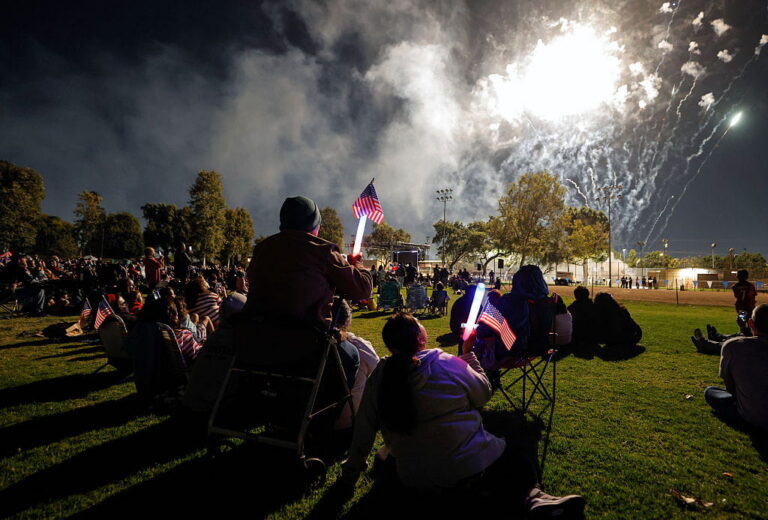
(Photo by Mario Tama/Getty Images)
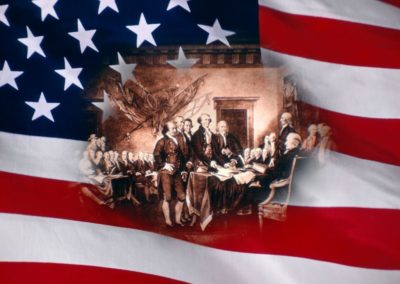
On July 2, 1776, delegates of the Second Continental Congress gathered in Philadelphia, Pennsylvania, where they voted in favor of a resolution declaring independence from Great Britain and its monarch, King George III. The vote was unanimous, although New York abstained. Two days later, on July 4, representatives from each of the 13 original colonies officially adopted the Declaration of Independence.
For 250 years, Americans have recognized July 4 as Independence Day, honoring the Founding Fathers who risked their “lives, fortunes, and sacred honor” in the fight for freedom. While the purpose of July 4 festivities remains the same, the way in which Americans celebrate their nation’s independence has changed over time.
Early Independence Day Celebrations
In the summer of 1776, patriots celebrated the Declaration of Independence by “holding mock funerals for King George III as a way of symbolizing the end of the monarchy’s hold on America and the triumph of liberty,” according to History.com. The somewhat morbid events were essentially a twist on the early-colonial tradition of celebrating the British king’s birthday each year.
When they weren’t mocking King George III, many colonists celebrated independence with bonfires, concerts, and parades. Cannons and muskets also rang out across the colonies in support of the cause of liberty.
The first official commemoration of America’s independence was held in Philadelphia on July 4, 1777, in the midst of the Revolutionary War. The following year, General George Washington gave his troops double rum rations to celebrate the patriotic anniversary. July 4 didn’t become an official state holiday until 1781, when Massachusetts recognized it just months before the patriots’ victory at the Battle of Yorktown.
Independence Day Fireworks
Modern Independence Day festivities almost always include fireworks, and while the earliest celebrations usually leaned on bonfires and muskets, it didn’t take long for fireworks to become a core part of America’s patriotic traditions.
On July 4, 1777, just one year after the Declaration was signed, patriots set off fireworks during a “spontaneous citywide celebration” in Philadelphia, according to the Pennsylvania Evening Post:
“The evening was closed with the ringing of bells, and at night there was a grand exhibition of fireworks (which began and concluded with thirteen rockets) on the Commons, and the city was beautifully illuminated.”
The Post reported that “…the anniversary of the Independence of the United States of America, was celebrated in this city with demonstrations of joy and festivity.”
After the Revolution
In 1870, Congress officially made July 4 a holiday. From the Revolutionary War and the War of 1812 to the Civil War and beyond, Independence Day celebrations have endured through every chapter of American history.
On the fiftieth anniversary of American independence, the author of the Declaration of Independence, Thomas Jefferson, expressed the belief that Fourth of July celebrations are important because they serve as a reminder that all of mankind was born free and should remain free “by the grace of God.” He added: “These are grounds of hope for others. For ourselves, let the annual return of this day forever refresh our recollections of these rights, and an undiminished devotion to them.”

- Patriots first celebrated independence with mock funerals of King George III.
- Independence Day fireworks became an annual tradition after they were first used in Philadelphia on July 4, 1777.
- Congress made July 4 an official holiday in 1870.