
-
The U.S. Government
-
The Executive
- The Federal Impeachment Process Explained – Lesson
- The Federal Impeachment Process Explained – Quiz
- The History of Impeachment – Lesson
- The History of Impeachment – Quiz
- The History and Purpose of the National Guard – Lesson
- The History and Purpose of the National Guard – Quiz
- What is the State of the Union Address? – Lesson
- What is the State of the Union Address? – Quiz
-
Police and Law Enforcement
-
Military Affairs
How Congress Really Works – And Why – Lesson
A voice for the people and the states.
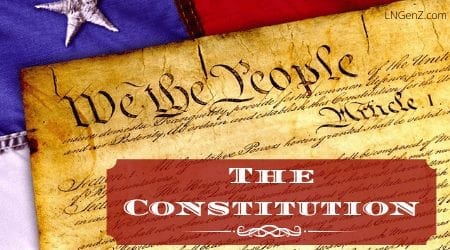
Ever wonder how laws are made? Before being signed by the president and officially made law, every bill must pass through two very different rooms, the House of Representatives and the Senate. Together these two chambers form Congress, the legislative branch of the federal government. This bicameral structure – from the Latin words meaning “two chambers” – ensures that both the states and the nation’s people have a voice in lawmaking. As stated in Article One of the US Constitution: “All legislative Powers herein granted shall be vested in a Congress of the United States, which shall consist of a Senate and House of Representatives.” Understanding how the two chambers differ is essential to comprehending how federal laws are made.
How It Works – The Legislative Process
When bills are drafted, they’re introduced to either the House or the Senate. Then they’re discussed by committees, who eventually vote on whether to send it on to the full body. If that happens, there’s debate among the entire chamber, then yet another vote. But to make it to the president’s desk to be signed into law, a bill must successfully complete this process in both chambers of Congress.
Technically, it only takes a simple majority to pass a bill. That’s 50% of voting representatives or senators, plus one – which could be a tie-breaking vote. In the House, that’s how it works for just about everything, and should a tie occur, the Speaker of the House breaks the tie. In the Senate, however, there’s another procedure called the legislative filibuster. To keep it simple, in order to force an end to debate and get to that final vote that only requires a simple majority, 60 out of 100 senators have to support it.
 The Senate also considers and confirms presidential appointments. While there used to be a filibuster requirement there, it has been whittled away over multiple sessions so that now a simple majority confirms a nomination, and in case of a tie, the vice president of the United States – who is the president of the Senate – casts the deciding vote.
There are exactly two senators for each state, meaning that we have a modern total of 100. Initially, these lawmakers were chosen by the legislatures of the states. This gave the states themselves a sense of agency and a voice in the nation’s decision making. That all changed with the 17th Amendment in 1913, which made senators electable by popular vote, instead. Still, the Senate is considered more the states’ house in Congress. Senators serve six-year terms and then are either replaced or re-elected, while representatives serve two-year terms.
The House of Representatives is much bigger – and less standardized. Representatives were always elected by popular vote, and the number each state gets is based on population. In total, there are 435 House seats – meaning Congress is made up of a combined total of 535 legislators. But, of course, it wasn’t always that big.
Change Can Be Hard – The Early to Mid-19th Century
When the first US Congress assembled in New York City in 1789, its 59 representatives and 22 senators began putting the Constitution’s system of government into play.
The early 19th century saw changes in the number of US citizens as well as the admission of new states. That growth resulted in the expansion of Congress as well. A rising population increased the size of the House, while the admission of new states added members to both chambers.
Conflicts surrounding slavery and the Civil War (1861 to 1865) had a great impact on Congress. Sharpening divisions between the Southern and Northern states led to the ratification of the 14th Amendment to the Constitution, which granted all citizens equal protection under the law.
Somewhere in the Middle – The Late 19th and Early 20th Centuries
In the late 19th and early 20th centuries, the Progressive Era brought about major changes in Congress. Again, the 17th Amendment established the direct election of senators in each state. The introduction of primaries and referendums helped to make the legislative process more transparent and kept the members more accountable. At the same time, Congress used its powers, including the Commerce Clause, which granted Congress the power to “regulate Commerce with foreign Nations, and among the several States, and with the Indian Tribes,” and the General Welfare Clause that granted Congress the power to tax and spend money for the benefit and welfare of the American people.
 By the time the Republican Party was formed, it dominated Congress until the 1930s. The Great Depression transformed the political landscape, though, weakening any confidence the people had in the federal government. This paved the way for Democrats under the leadership of Franklin D. Roosevelt to create a unified government. Roosevelt started the New Deal era that introduced banking reform laws, emergency relief programs, public works projects, agricultural support, and labor protections, among other things. These applications greatly expanded the federal government’s role in the US economy.
As the mid-1950s approached, the civil rights movement took center stage. Key legislation known as the Civil Rights Act of 1964 and the Voting Rights Act of 1965 were enacted by Congress with the intention of ending racial segregation and discrimination.
Congress in the Modern Age
From the late 20th century to today, modern technology and communications have changed the issues Congress faces. Not only do the members rely on the technological advances themselves, but they must also shape laws around the continuing advancements. Other congressional changes came about following the events of September 11, 2001. In response to the attacks, Congress created the Department of Homeland Security, an agency of the executive branch that is responsible for coordinating the nation’s response to terrorism, cyberattacks, natural disasters, illegal immigration, and other threats.
Our Founding Fathers recognized the importance of a strong federal government but also understood that problems could arise if too much power was given to any single entity. Congress has grown over the years – though so has the government in general – and many things have changed. But one thing that remains the same is the bicameral structure of Congress and its checks and balances on the system. As messy as the process might look sometimes, that’s just America at work.

- The US Congress is made up of an upper chamber (Senate) and a lower chamber – (the House of Representatives).
- The primary role of Congress is to create and pass legislation.
- The Senate represents each state, while the House gives citizens a voice.