Ghost Ancestors – Humanity’s Mysterious Ancient Relatives
Scientists have discovered two unknown relatives who are related to all modern humans.
By: Elizabeth Lawrence | August 10, 2026 | 480 Words
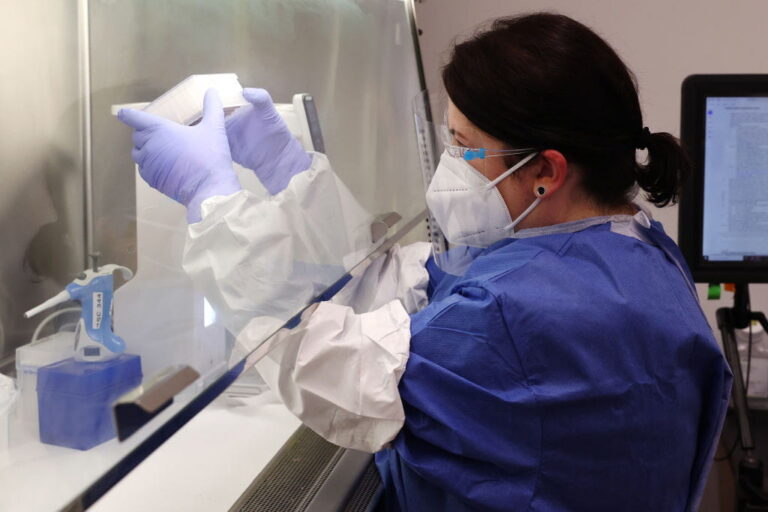
(Photo by Michael M. Santiago/Getty Images)
Scientists have discovered that modern human beings are related to “ghost” ancestors – that is to say, two unknown ancient human species that no longer exist. Traces of our mysterious relatives, who likely bred with H. sapiens and Denisovans – two other extinct human species – between 50,000 and more than 200,000 years ago, were found in modern human DNA, according to a new study in Science, a journal that focuses on “important scientific discovery.”
One of the study’s authors, Berkeley graduate student Yulin Zhang, explained that researchers previously suspected modern humans were related to “unknown archaic lineages in modern humans,” but only Zhang and his team “were actually able to find and map genomic locations in modern humans that are from this ghost lineage and show that this ghost ancestry is in all modern humans, not only in Africans.”
‘Ghost’ Ancestors
Scientists first discovered the DNA of Neanderthals, an extinct species of ancient humans, in fossils found in Engis, Belgium, in 1829 – although it took nearly a century to confirm their identities. Denisovans were another group of early humans closely related to Neanderthals. UC Berkeley researchers set out to find ancient DNA in the human genome that came from something other than Neanderthals or Denisovans.
 Zhang and fellow researcher Arjun Biddanda focused on a mysterious ancient human lineage that may be linked to about 1% of modern human DNA. Scientists believe the ancestors of modern humans split from other human groups roughly 550,000 to 750,000 years ago, Popular Mechanics explained. The unknown “ghost” population, on the other hand, may have existed one million years ago.
“We no longer have to wait for extraordinary fossil preservation to learn about extinct human populations,” study co-author and evolutionary geneticist Priya Moorjani told Live Science. “Instead, the genomes of living people contain traces of these ancient ancestors, and genealogical methods allow us to recover some of that hidden history.”
The Unknown
The study was a breakthrough in understanding the human genome, but it raised more questions than it answered. Researchers were left with many mysteries that could take years to solve.
“[T]he functional impacts of [ghost genes], including their roles in immunity and metabolism, have yet to be fully characterized,” the study explained. “Future studies that integrate additional ancient genomes at deep timescales, particularly from Africa and Asia, will be critical for refining the timing, sources, and evolutionary consequences of these introgression events.”
Essentially, the scientists still do not know exactly how these ancient genes impact modern humans. Additional research, especially using ancient DNA from Africa and Asia, could help reveal when these groups mixed with the ancestors of modern humans and what traits they may have passed down to people today.

- Scientists have discovered that modern human beings are related to “ghost” ancestors.
- A new study revealed traces of our mysterious relatives were found in modern human DNA.
- Researchers hope to discover how the “ghost” ancestors impact modern humans.